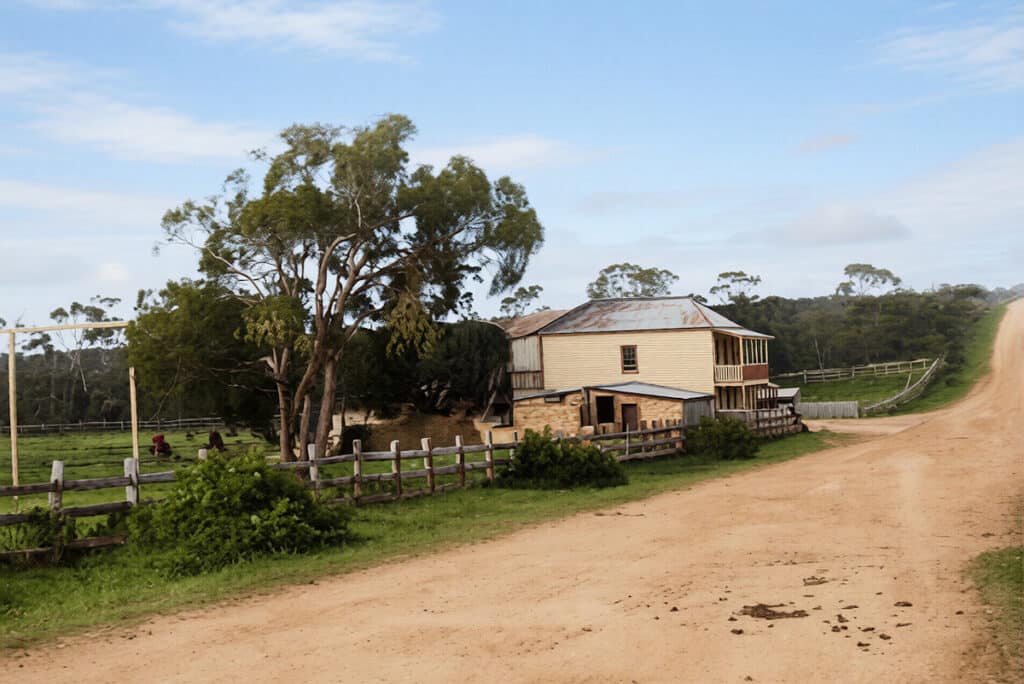

Today marks the 130th anniversary of arguably the most significant landmark in the history of West Australian football. In the mid-afternoon of Saturday May 30, 1896, 44 men representing four hastily-organised clubs commenced the first ever league season in this state.
At the glamorous-in-name-only Polo Ground, opposite what the modern day Perth Oval, Perth BAFC toiled hard to register a 2-0 win over Civil Service. And little under a kilometre away on the former swampland that was Weld Square, Fremantle Wanderers brushed aside Crusaders to the tune of 7-0.
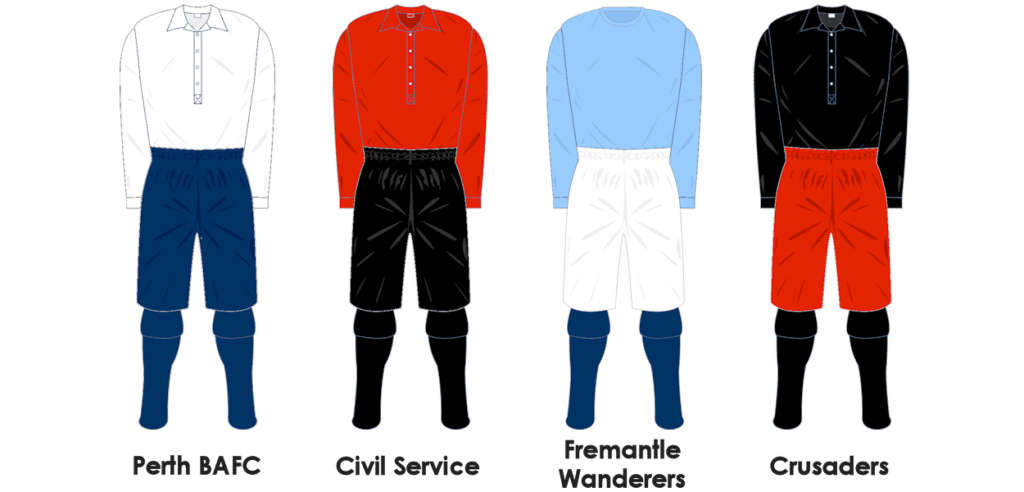
Two of those clubs would not decide their playing colours until a week later, and the two that had settled on their strip are likely to have worn mis-matched shirts. Nonetheless, it was a remarkable achievement given the Western Australia British Football Association had been formed only a fortnight earlier during a meeting at the United Service Hotel.
On the evening of Wednesday May 20, the Associations’ second meeting at that same venue attracted “thirty or forty persons”. It got underway with formalities and the appointment of Englishman Harry Brown, Perth Building Society manager and a committee member of the West Australian Cricket Association, as chairman.
John Davies, General Traffic Manager with the Department of Commissioner of Railways, was then confirmed as Association president. Davies had reportedly played international football for Wales prior to arriving in Western Australia in 1892. It was unanimously resolved that another railways employee, Edward Pope, be secretary.
Harry Brown and Edward Pope then put forward a trio of names for the vice-presidency. Accepted into the position jointly were mining entrepreneur and current Perth mayor Henry Saunders, Thomas Hardwick and John Jones, that latter pair being manager and secretary, respectively, of the Swan Brewery Company.
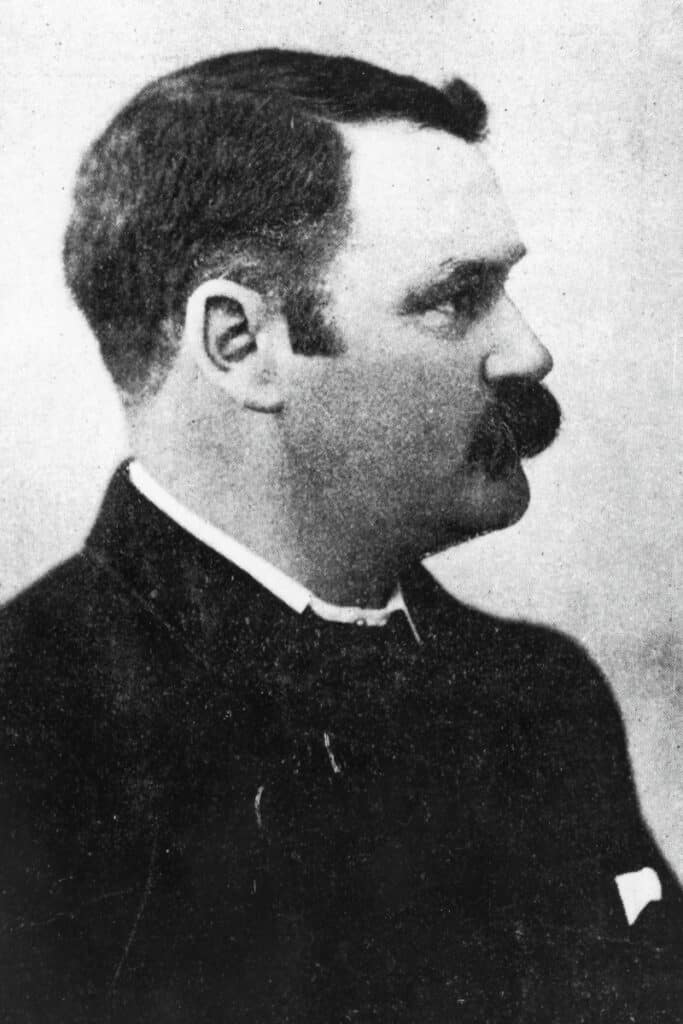
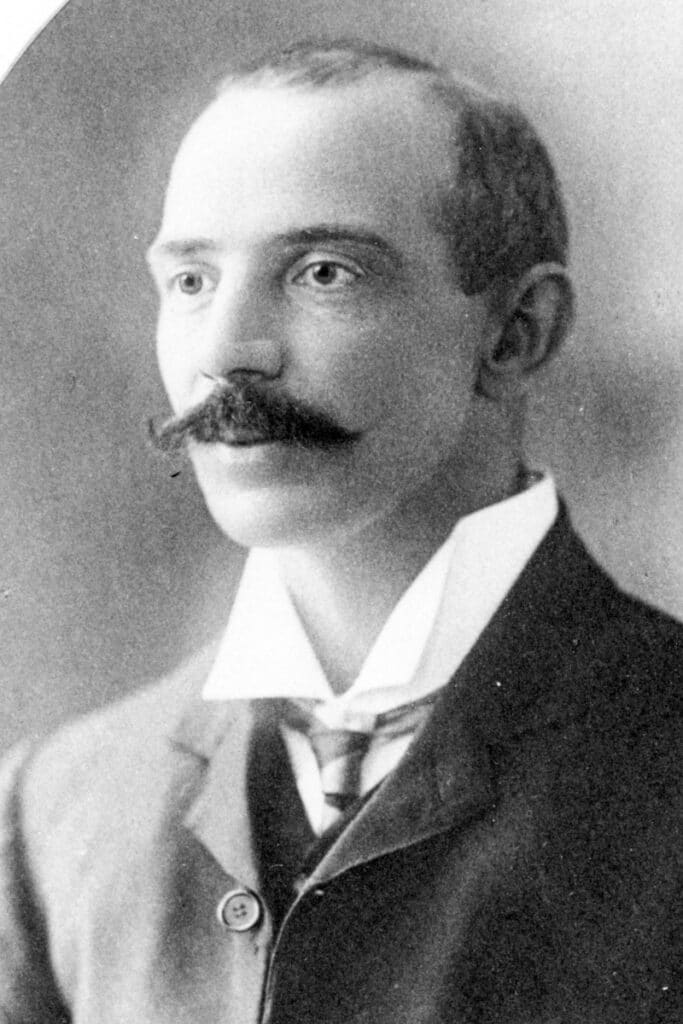
Next, Edward Pope announced the formation of Civil Service, a club composed of Government workers. John Sedergreen, an employee of Henry Saunders, then took the floor to declare the formation of Crusaders. With Perth BAFC established the previous week, the Association now had three clubs on its books with JT Stanton directing his efforts towards forming a fourth in Fremantle.
Following discussion, it was decided three delegates from each of the newly formed clubs would be required to attend meetings of the Association. The entrance fee to join the Association was set at £1 1s – around AU$175 in today’s currency – and each club would pay a subscription of that same amount.
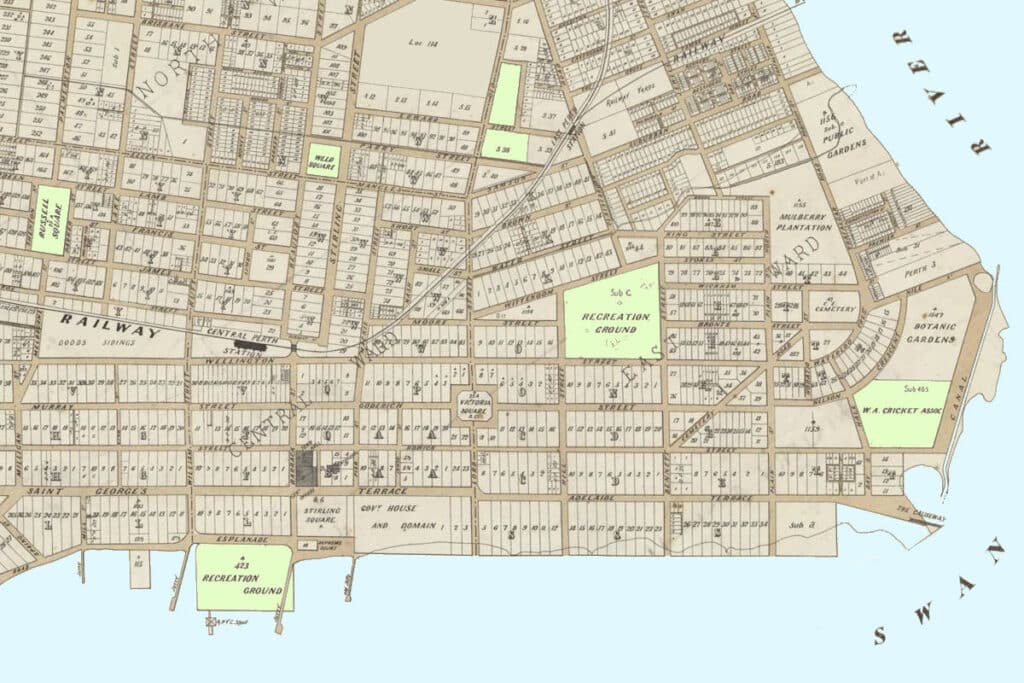
The matter of where to play was raised by Harry Brown and Edward Pope, who had been tasked with finding suitable venues. This had proven quite the challenge as the Perth Municipal Council’s open spaces had already been allocated to the Australian Rules and Rugby associations, whose seasons had commenced the weekend prior.
Nonetheless, progress had been made with a number of potential locations earmarked. “Negotiations are now being carried on in respect to renting a ground off Lake-street, and if secured, that, in connection with Weld Square, will serve for present requirements,” reported ‘the West Australian’ newspaper.
In the days that followed the management structures of the two newly formed clubs took shape. The presidency of Civil Service was accepted by the Premier of Western Australia, Sir John Forrest, with high-ranking Government officials Frederick Piesse, Edward Wittenoom, Septimus Burt and Alexander Richardson as vice-presidents. Railways employee Arthur Letch was appointed secretary.
Henry Saunders was unanimously elected president of Crusaders. Arthur Lovekin, managing director and editor of ‘the Daily News’ newspaper, and Mr McDonald were voted in as joint vice-presidents with South Australia-born Frank Venn accepting the secretary and treasurer roles.
On Tuesday May 26, an Association delegation of JT Stanton, W Boase and J Maxwell journeyed to Fremantle to raise the matter of forming a club in the port town. According to ‘the Inquirer and Commercial News’, the meeting at National Hotel “was met with a gratifying amount of success” with the end result being the establishment of Fremantle Wanderers, a club composed predominantly of Scots.
24 hours later, the Association assembled for a third time at the United Service Hotel where news of the Fremantle club was warmly received. With four clubs on board, a programme of matches for the season was finalised and the opening round scheduled for three days later – even though the question of ‘where to play?’ remained unanswered.
Association secretary Edward Pope made a public plea for assistance. “The difficulty in regard to playing grounds has not been definitely settled, and the hon. secretary to the association will be very grateful to anyone who can afford him any assistance in this matter” read his notice in ‘the West Australian’ of Thursday May 28.
The same edition of the daily newspaper carried details of the seasons’ opening fixtures. Perth were scheduled to play Civil Service on a patch of land near the corner of Adelaide Terrace and Bennett Street in Perth, while Crusaders would “try conclusions” with Fremantle on Weld Square. Kick-off for both matches was set at 3:30pm.
Hours before kick-off, the Association received word that mining entrepreneur William Hodgkinson had offered the use of the Polo Ground, part of an eight acre parcel of land near the corners of Edward Street and Guildford Road (aka Lord Street) in Perth. Hodgkinson’s generosity was accepted and arrangements quickly made to relocate the Perth-Civil Service meeting.
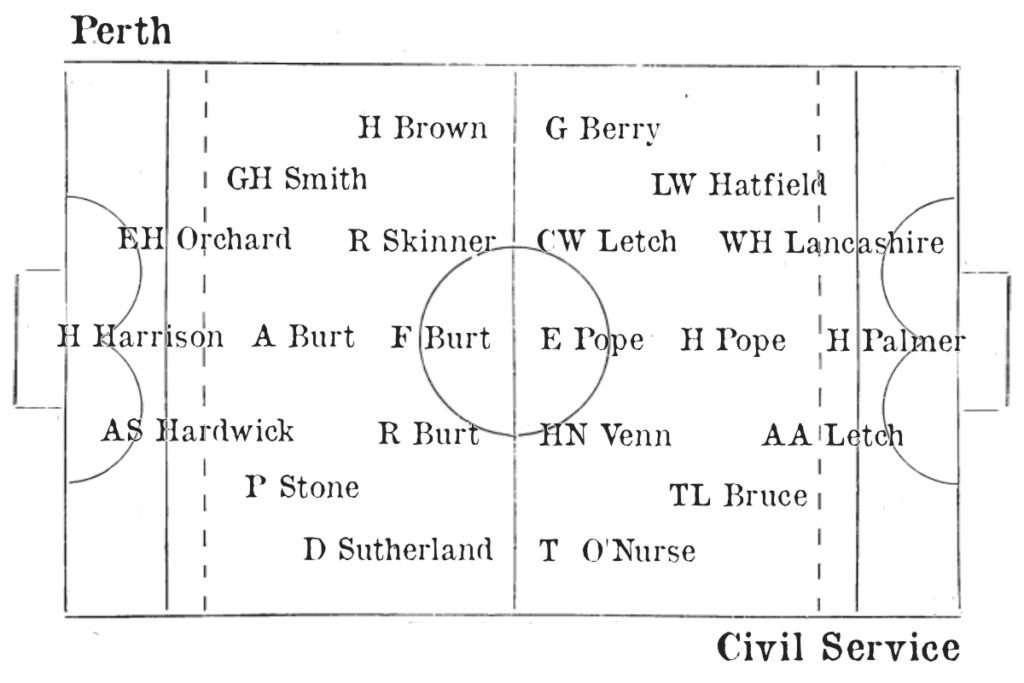
The inaugural season of the Western Australian British Football Association kicked off at 3:30pm on Saturday May 30. On a lumpy stretch of grass with crude line markings, rudimentary goalposts with no nets and the temperature hovering in the low 20s, Perth carved out a 2-0 win over Civil Service courtesy of a brace from 16-year old Reginald Burt.
And not far away on the recently drained wetland that was Weld Square, a large crowd gathered to witness Fremantle inflict a 7-0 thrashing on Crusaders, who were “handicapped by three of their best men failing to put in an appearance, and by having one man injured. Considering the nature of the ground, the game was a fast and good one.”
The Association’s plea for playing space resulted in two further offers ahead of the second round of matches. East Perth dairyman August Desprez made available a portion of his land on Guildford Road, adjacent to the Polo Ground, where John Donaldson scored himself to a hat-trick in Civil Service’s 5-0 hiding of Crusaders.
Fremantle were similarly impressive in sweeping aside Perth 5-2 at the Half-way House in Cottesloe. As the name suggests, the ground was at the mid-point of the Perth-Fremantle Road (aka Stirling Highway). Thanks to the generosity of proprietor JB Boulton, the Half-way House would host a game almost every weekend from here on.
The theme was familiar leading into Round Three. “The association is in a perfect quandary as regards a suitable ground whereon to play, and in this respect it is in the same fix as the Rugby Union players as to where to-morrow’s matches will be contested. The Crusaders and the Perths are billed to meet but where – that is the question,” reported ‘the Inquirer and Commercial News’.
Weld Square ended up hosting the Perth-Crusaders match, which was claimed 7-0 by the former. Civil Service returned home from the Half-way House empty handed after Fremantle registered a third successive win, this also 7-0. At the mid-week meeting of the Association, talk turned to representative football and a meeting between teams from Perth and Fremantle.
At the National Hotel 24 hours later, Fremantle Wanderers decided on their management team. Voted into the presidency was National Hotel licensee Frederick Carlisle with R Patterson, W Taylor and TJ Rawson as vice-presidents. Those present also agreed to form a second team, which made its first appearance a few days later against a Perth eleven at Weld Square.
On that same afternoon Frederick Burt bagged his second hat-trick in as many weeks in Perth’s 4-2 defeat of Civil Service. It was something of a fortuitous win for Perth who survived a late scare with two players exiting the action early due to injury. Fremantle continued on their merry way with a 4-1 defeat of Crusaders, who no doubt would have celebrated their first goal of the campaign.
Crusaders had been struggling to put a team out and on Saturday June 27 only six players turned up to play Civil Service, the remainder having missed the train from Perth to Cottesloe. Not surprisingly, the Service won 5-0. Elsewhere, Fremantle made it five from five by defeating Perth 4-3 in a thriller at Desprez’s Paddock.
The league went into recess at the start of July when the Southern Cross club made the 400 kilometre journey from the Goldfields to Perth for a pair of friendlies. The miners first outing was against Fremantle, whose early dominance laid the foundations for a 4-0 win at the Half-way House on Saturday July 4.
Two days later the first representative game in Western Australia took place; Southern Cross out-scoring a Perth Combined side in an afternoon fixture on the Esplanade. The Perth Combined eleven consisted of Fred James, Walter Lancashire, Edward Pope (Civil Service), J Fern, John Sedergreen, J Gibb (Crusaders), Arthur Hardwick, Percy Stone, Archibald Burt, Fred Burt and Reginald Burt (Perth).
When the league resumed, Crusaders collected their first point by holding Perth to a 1-1 draw. And on a sandy Russell Square, Civil Service became the first club to take points off Fremantle after HO Clews scored a hat-trick and John Donaldson a brace in a 5-1 triumph. Fremantle (10 points) lead the way at the season mid-point followed by Perth (7) and Civil Service (6) with Crusaders (1) a distant fourth.
Crusaders hopes of clawing back further ground were dashed after W Boase and M Dickinson scored two apiece in Fremantle’s 6-1 Round Seven win. Goals to John Donaldson (2), HO Clews and Tom O’Nurse allowed Civil Service to jump into second place with a 4-2 defeat of inner-city rivals Perth, for who brothers Fred and Reginald Burt were on target.
Fremantle collected full points for the seventh time by out-classing Perth 4-2 in Round Eight, while Civil Service consolidated second place with a 3-1 win over Crusaders. Seven days later Civil Service moved to within two points of Fremantle by claiming a 2-1 win from their thrilling top-of-the-table encounter at the Half-way House. Third-placed Perth weren’t troubled in accounting for Crusaders 4-1.
An eight-man Crusaders side worked tirelessly only to succumb 6-2 to Fremantle in Round Ten. Civil Service’s five game winning streak came to an abrupt end when beaten 2-0 by Perth on the Old Recreation Ground (aka Wellington Square). With three games to go, Fremantle (16) held a four-point advantage over Civil Service (12) with Perth (11) hot on their heels. Stumping up the table were the luckless Crusaders (1).
A pair of rapid fire first half goals from John Donaldson guided Civil Service to a 2-0 success against Crusaders in the second to last round of the campaign. The ground shortage lead the Association to postponing the days other fixture between the competition’s two most popular clubs, Perth and Fremantle.
Civil Service drew level with Fremantle after Edward Pope scored twice and John Donaldson once in a 3-1 win over the port side in the final full round of matches played at the WACA Ground. At the same venue, Fred Burt put away five goals and Reginald Burt two as Perth thrashed Crusaders 7-1.
The inaugural season closed out on Saturday 29 August when Perth and Fremantle battled it out on the Old Recreation Ground (aka Wellington Square). A bumper crowd of close to 500 were on hand as Fremantle scored with just minutes remaining to snatch not only a 1-1 but also the point needed to win the league.
The final standings had Fremantle with 17 points, one more than their nemesis Civil Service. Perth placed third on 14 points with Crusaders last having collected just a solitary point from twelve outings. With the fledgling Association unable to rustle up a trophy, Fremantle’s prize for winning the league was purely one of honour.
Football had undergone tremendous growth in the 109 days between the Associations’ formation and our first league champions being declared. During that period close to 100 players had worn the colours of the four foundation clubs, crowds had swelled to number in their hundreds and the hearts and minds of Perth’s sporting community were captured by ‘socker’. Organised football had arrived in Western Australia.