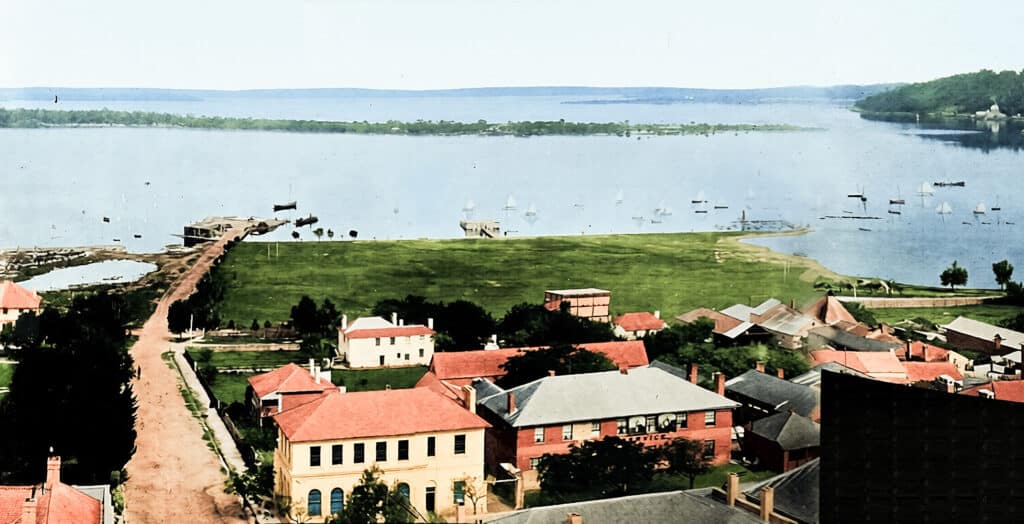

“An enthusiastic meeting of gentlemen devoted to the British Association game of football was held at the United Service Hotel last evening,” read ‘the Western Mail’ newspaper report of the mid-1896 gathering that signalled the birth of organised football in Perth.
“The proceedings were of such an enthusiastic character as to encourage the hope that the present movement in the interests of the most popular game of football in the old country will be attended with most successful results.”
A series of letters had appeared in Perths’ newspapers across the opening weeks of May calling for football to be played in the colony. Those words, penned by brothers Frederick and Archibald Burt along with Arthur Hardwick, provided the impetus for the aforementioned meeting on the evening of Wednesday May 13, 1896, when the Western Australia British Football Association was formed.
Momentum built rapidly and, barely a fortnight after that fateful meeting, four hastily-organised clubs kicked off what would be a thirteen-week campaign to decide the state’s first league champions. Organised football had finally gained a foothold in Western Australia.
The first attempt to get football off the ground arrived four years earlier, in April 1892, when ‘C.B.’ penned a letter to ‘the West Australian’ newspaper gauging interest in the game. His words led to the formation of the English Association and Rugby Union Club, which hosted a handful of impromptu practice matches of both codes.
Further matches were played across the middle part of 1893 and, in June of that year, the English Association Football Club was formed. Unfortunately, the momentum couldn’t be sustained and football slowly faded from view. Rugby, by contrast, went from strength to strength with the establishment of three clubs under the newly formed West Australian Rugby Football Union.
Three years of ad hoc football passed before ‘Swift’ sought to revive the code. “The football season is fast approaching,” opened his (or her) letter to ‘the West Australian’ of April 1896. “Surely there should be a sufficient number of Englishman here conversant with what is now the premier game at home – the English Association – to enable a club to be started.”
The lack of a reply or any action would have signalled the death knell had it not been for 18-year old Fred Burt. The second eldest son of Septimus Burt, Western Australia’s first Attorney-General after responsible government, Fred, like his five brothers, studied at Repton School in Derbyshire, England. While aboard, he had acquired a passion for the round ball code.
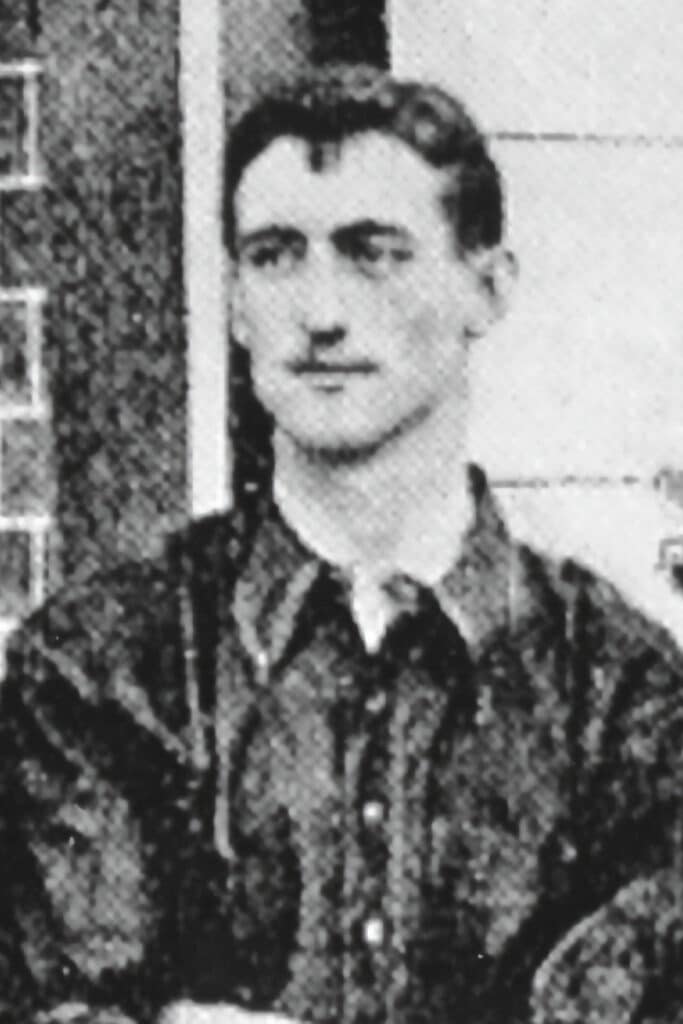
On Monday May 4, Fred, who worked for the family-run Stone & Burt legal firm, sat down to pen an impassioned plea for the formation of a football club in Perth. His words, echoing those of ‘Swift’, were published two days later in the ‘the West Australia’ under the pseudonym ‘An Old Reptonian’ –
“Is it not possible to form a football club in Perth for the “English Association” game? Surely there are enough residents in the city who would be only too glad to start such a club. It is a great annoyance when an Englishman comes to Perth or vice versa to have to learn new rules in order to get a game of football. I believe a club was started here a few years ago, but I have no idea why it did not continue. I hope some influential person will soon take this matter in hand, as I know that when a club is once started, it will enrol many members.”
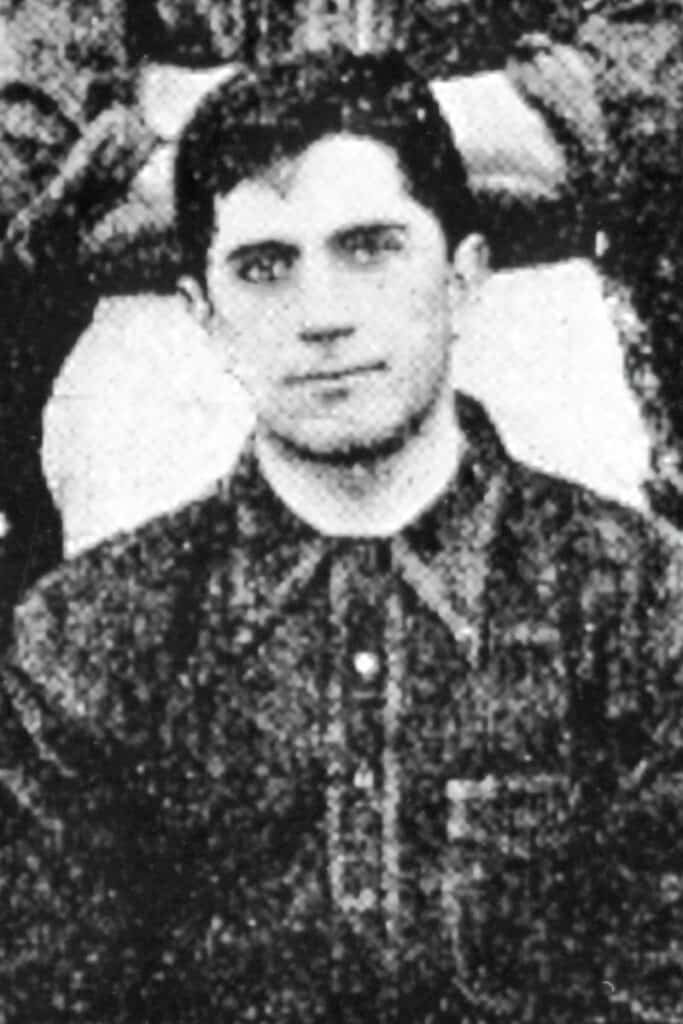
The next days’ newspaper featured a reply from ‘An O.B.’, who is believed to be Arthur Hardwick, a 20-year old solicitor-in-training with Stone & Burt. Arthur had played in the games of a few years earlier and in April 1893 was appointed treasurer of the Club.
“I perused with pleasure An Old Reptonian’s letter in your issue of to-day, in which he expresses the desirability of forming and English Association Football Club. As one of the committee of the now defunct club, to which An Old Reptonian refers, I would inform him that it was solely the want of a suitable playing ground that rendered it impossible to continue the Association game. There was no lack of enthusiasm on the part of the members, and very little difficulty was experienced in arranging matches. I would suggest, therefore, that a meeting of all those interesting the English Association game be called at once to discuss the idea of forming a new club, when the question of securing the use of a ground might also be considered.”
Momentum was building and on Friday May 8 three further letters of support were published. One of those, under the pen name ‘Another O.R.’ (possibility Another Old Reptonian), is understood to be from Archibald Burt, who had seemingly been enlisted by younger sibling Fred and his work colleague, Arthur Hardwick, to further the cause –
“It was with great pleasure that I read the letters of ‘An Old Reptonian’ and ‘An O.B.’ in your issues of to-day and yesterday on Association Football. I feel sure that a club could be easily formed in Perth. I think it would be a very good plan if ‘An O.B.’ as a member of the committee of the old club, could call a meeting to talk matters through.”
‘A.F.Orward’ applauded the efforts of Fred Burt and Arthur Hardwick before tackling the matter of a playing field –
“I am very glad to see that some are beginning to exert themselves over the above matter. If there is one thing desirable in Perth (there are many I must admit) it is a football club for the game of the Old Country. ‘An O.B.’ remarks that the club that was started a few years back came to grief owing to the inability of procuring a ground. Surely some gentleman would lend a ground to practise on, as it could not possibly be injured; and besides, I think that I am right in saying that the recreation grounds are free to anyone to play on, as long as they give notice beforehand. I earnestly hope that ‘An Old Reptonian’ and ‘An O.B.’ will succeed in their endeavours to start a club.”
The third letter “To the Sporting Editor” came from a new arrival in the colony who went by the name ‘Full Back’. It’s quite likely ‘Full Back’ was an employee of the Western Australian Government Railways, which would contribute no fewer than ten players to the league –
“I was pleased to see in your Wednesday’s issue that ‘An Old Reptonian’ had not lost his love for the dear old English Association game, and that he gave the question an airing. Now that the idea has been mentioned, I would re‑echo, “Could not such a club be formed?” I can guarantee 12 members, and I have not been acquainted with Perth more than a fortnight.”
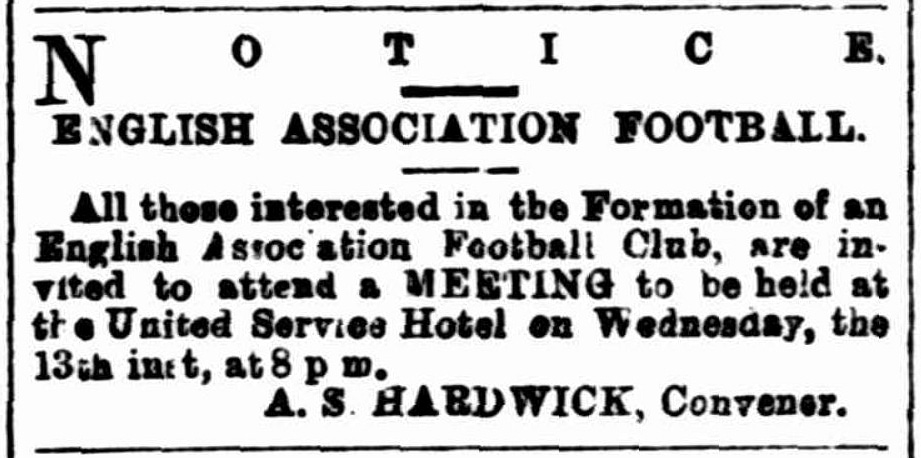
Seizing on this groundswell of support, Arthur Hardwick placed an advertisement in the Monday May 11 edition of ‘the West Australian’ inviting anyone interested in forming a club to meet at the “well known sporting hotelry” the United Service Hotel in central Perth at 8:00pm on Wednesday May 13.
Readers of ‘the West Australian’ were greeted by three further letters on the day of that fateful gathering. The first was credited to ‘Spectator’, who expressed his confidence that players from rival codes would flock to association football once they had seen what was on offer –
“Often have I expressed a desire for the re-introduction of the English Association game in this colony. Once (you) let clubs be formed – which should be easy with the numerous able exponents of the game available – I feel positive the public will commence to take a keen interest in the interclub matches, and that a big following will be secured from among the many active players of both the Rugby and Victorian games, as well as from the rising generation of active boys and youths. With only eleven aside, no handling of ball, save by goalkeeper, the ball constantly moving, two field umpires, no better exposition of football can be seen. Those fortunate enough to have witnessed any important football contests in England or elsewhere cannot but admit that the English Association is the more scientific and fascinating as well as the faster game, no vexatious delays and no wrangling. May the game be in full swing before many weeks elapse.”
The next came from ‘An Old Stager Frae Glesca’. It is believed he may have been Scottish-born JT Stanton, who had played for the Hamilton club in regional Victoria prior to making his way to Perth for reasons of work –
“Noticing a letter in Wednesday’s issue of your valuable paper regarding the English, or rather British, Association football, suggesting the formation of a club in Perth, signed ‘Reptonian’, I was very pleased to see the ball set a-rolling, as I quite concur with ‘Old Reptonian’ in the belief that there are plenty of young gentlemen in Perth who at one time or other were associated with the game in the old country; in fact I can vouch for a team myself comprising old players from such clubs as Renton, Renfrew, St. Mirren, Abercorn, Clyde, Dunfermline, Battlefield, Celtic, St. Bernards, Hibernians, and Morton. Being a Scotch player, I am not in a position to speak for the English, Irish, and Welsh partisans of the game, but I am positive that a goodly number of our friends over the border and Channel would be with us if such a club were formed.”
The third letter, penned by ‘British’, celebrated the recent formation of a club in the Goldfields town of Southern Cross before challenging any new club to play them on a home and away basis –
“I noticed a letter in your issue of the 6th inst. on the British Association game of football, and for general information I beg to state that there is a club formed at Southern Cross and open to play any team in Western Australia home and away matches. I may also state that we have a strong team of 60 members. We have players here from Queen’s Park (Scotland) down to the Minmi Cameos, and I hope that someone who is a better expert at writing than I am will take the matter up and push on the noble British Association game at football. Any further information may be had from J Stenhouse, care Shank’s hairdressing saloon, Southern Cross.”
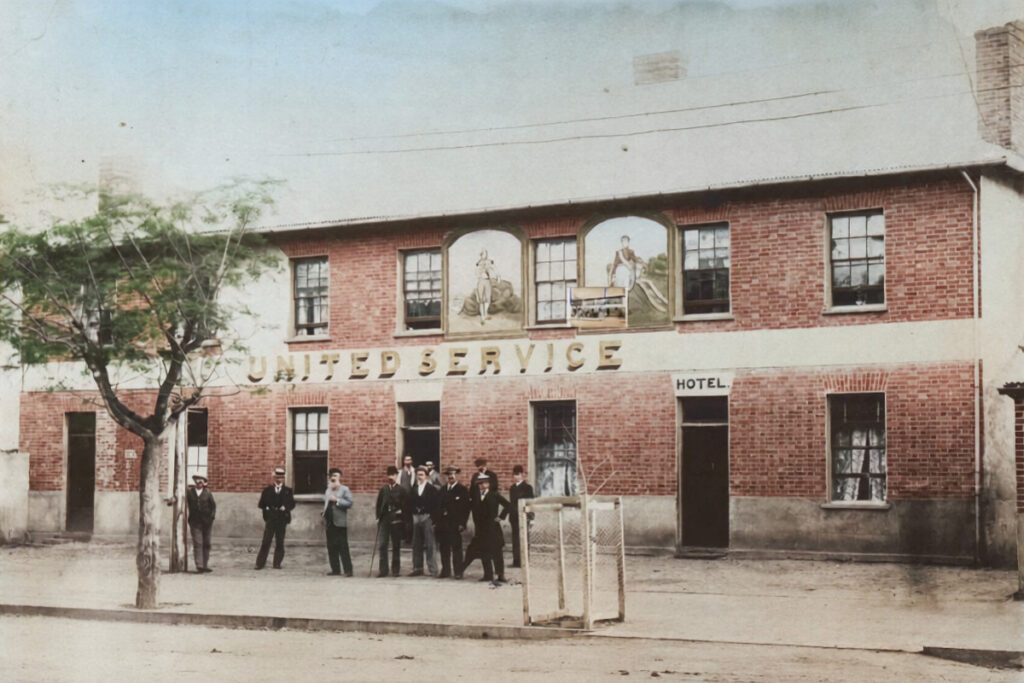
Established in about 1833 on St George’s Terrace, near the corner of Barrack Street, the United Service Hotel was one of the earliest hotels in the colony. By 1896 it has been in the hands of the Strickland family for close to quarter of a decade, during which time it become known for its connections into Perth’s sporting communities.
It was close to standing room only when Arthur Hardwick welcomed his fellow football enthusiasts to the hotel that evening. The first motion called for the appointment of a chair, with the thirty or so individuals voting in Harry Brown, manager of the Perth Building Society and a former law clerk with Stone and Burt. Edward Pope agreed to act as secretary.
Next, meeting convener Arthur Hardwick proposed that “it is desirable that the English Association game of football should be played” in Perth. Seconded by Edward Pope, the motion was carried with overwhelming popularity. Thomas Bruce then proposed “That a British Football Association be formed” with JT Stanton seconding. Again, it met with no objection.
John Davies, who reportedly played internationally for Wales, was elected president of the Association and the appointment of vice-presidents was left with the secretary and chairman. A third proposal – “That a club be formed forthwith, to be called the ‘Perth English Association Football Club'” – came from Mr Bryan and was seconded by Arthur Hardwick. This too was carried unanimously.
A working group of J Gibbs, Archibald Burt, Thomas Hardwick, JT Stanton, Percy Stone and Harry Brown was elected for the purpose of structuring the new Association and “generally to further the objects of the meeting”. That included inviting, via a newspaper advertisement, “all those interested in the present movement” to join a practice session later in the week.
“The first practice match under the auspices of the association was held on the Recreation Ground on Friday afternoon, when a number of enthusiastic votaries of the ‘socker’ game put in an appearance and engaged in play. A short practice was also indulged in on Weld Square on Saturday afternoon,” reported ‘the Inquirer and Commercial News’ of games played Friday May 15 and Saturday May 16.
By this date, moves were already afoot for the formation of additional clubs in Perth and another from the port town of Fremantle, 15 kilometres to the south-west. Further meetings across the next fortnight would lead to the first league season under the Western Australia British Football Association kicking off at the end of the month.