
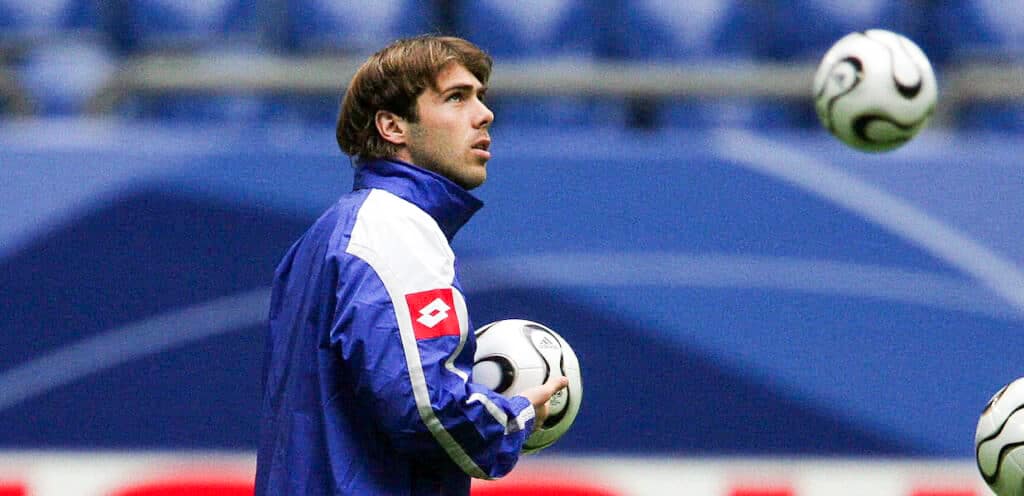

Surfing for England: Our Lost Socceroos looks at the players who might have or could have played for Australia but who didn’t, for one reason or the other. In an exclusive courtesy of Fair Play Publishing, WA Over Yonder presents the story of one-time Perth Glory star Ivan Ergic, who represented Serbia and Montenegro at the 2006 World Cup in Germany.
The golden generation of Australian footballers was on display in the 2006 World Cup, with 11 members of the 23 man Australian squad having spent time at the Australian Institute of Sport in Canberra. John Aloisi, Mark Bresciano, Brett Emerton, Josh Kennedy, Mark Milligan, Craig Moore, Lucas Neill, Josip Skoko, Mile Sterjovsky, Mark Viduka and Luke Wilkshere were developed and honed as juniors within our government funded sports program.
However at this World Cup there were 14 footballers who had spent time at the AIS, three of these players would not be with the Socceroos. Croatia had Ante Seric and Joe Simunic, whilst Serbia and Montenegro played Ivan Ergic. How does it happen, that a taxpayer funded junior program would produce players that would turn out for other countries, it probably reflects more on the Australian game and the Australian administration at the time, rather than the choices of the players.
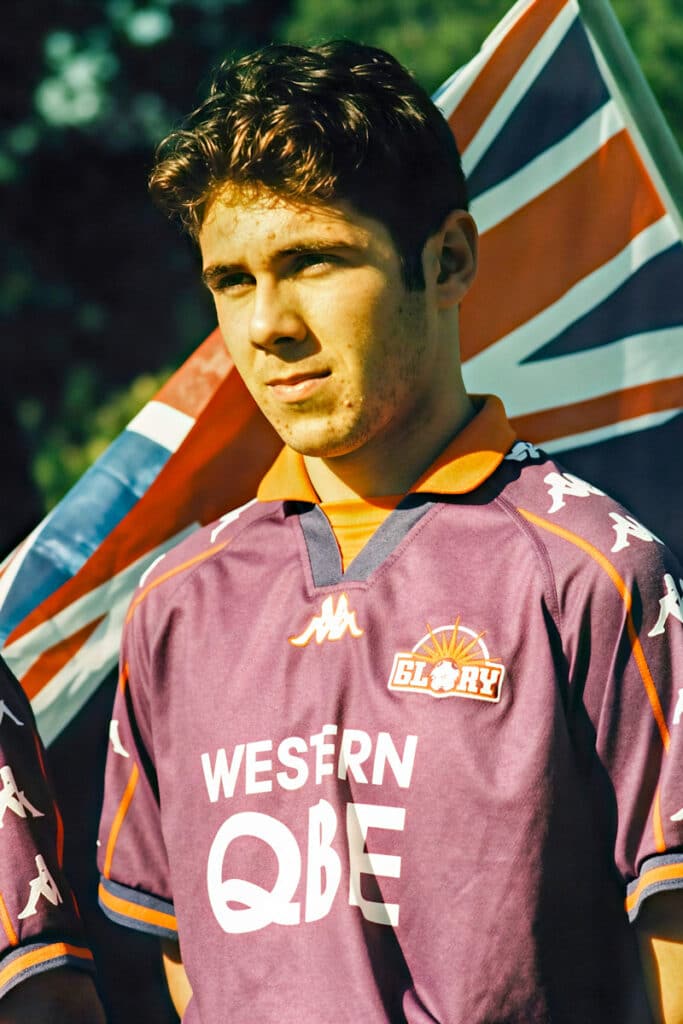

Ivan Ergic was a 15-year old refugee when he and his parents migrated to Carnarvon in the mid-1990’s, nine hours north of Perth in Western Australia. Escaping the troubles of Serbia at the time, the family spent time in Croatia before joining relatives, who were growers on the banana plantations. Ivan describes it as a typical refugee story, but something he really didn’t want to do.
“I must say I wasn’t delighted by the idea as I was 15 and already established as a potential young player, I knew something about Australia, I knew that soccer isn’t one of the major sports and that was a very disappointing thing for me, but we had no choice. Serbia at the time was a lot of trouble, and when my parents said we were moving I couldn’t say too much.”
Moving to Carnarvon from the Balkans was quite the cultural shock for Ivan. As refugees it also meant starting from the bottom as his parents had to work in the fields and factories to try and restart their life in Australia. Socially it would be a struggle as well, but things moved very quickly for Ivan, thanks to a local police sergeant who saw him playing soccer.
“He saw me play in the local Carnarvon league, he called some people in Perth and I went for a trial and from then on I played for the state team Western Australia, they contacted someone in Canberra at the AIS, so I went there for a trial and from then on things started to move pretty quickly.”
AIS coach Steve O’Connor remembers how Ivan came onto his radar. “Someone rang me from Perth, one of the contacts we had round the place, and he said there is this guy playing a little bit in Carnarvon, which is I don’t know how many kilometres north of Perth. I’ve seen him play football and he’s good. So we pulled him over to have a look at him and he had trials with us, he was clearly a decent player so we brought him in.”
Ivan wasn’t selected like the other members of the AIS through their interstate tournaments, he was the only one who got picked via a trial. “Things started moving pretty quickly for me, I only spent a year in Carnarvon, I was then about 16 when I ended up in Canberra.”
Given Ivan’s immigrant status, getting him eligible for the AIS was easy given their connections in Canberra. Steve remembers “We had to get him naturalised, you couldn’t get an AIS scholarship in those days unless you went through the naturalisation process. Yeah we got him through fairly quickly with that, as fast as we could. With contacts through the government and things, that the AIS obviously had. So we got him fast tracked, he was an outstanding prospect there is no doubt about that.”
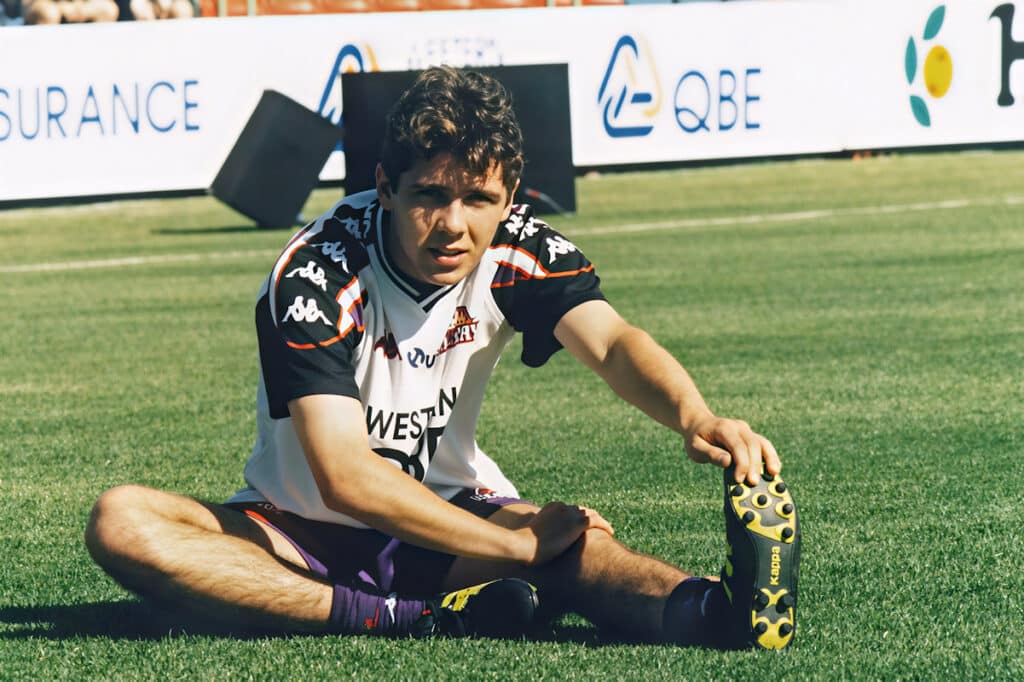
Ivan would get his Australian citizenship whilst in Canberra. “I remember I had to learn some things about Australia for this test, and then after two years I got my Australian Citizenship.”
With Ante Seric’s decision to play for Croatia still fresh in the mind of the AIS administrators, Ivan was also made to sign a waiver with the AIS. “It was an issue when I was at the AIS, there was some kind of paper I had to sign, in the next 2-3 years we are obliged to play for Australia and are not allowed to play for any other country. I remember the Seric case was very popular at the time.”
Ivan looks back at his time in Canberra with fondness. “The AIS though was the best time of my life. All the friendships, it covers your first going out, your first drink, your first love all these kinds of things were really happy for me there. The friendships though, when you live with twenty other 16-year olds, you can imagine what kind of atmosphere that must have been.”
Given his ability, and the happiness he felt at the AIS, it was every chance that Ivan would play for the Socceroos, an incredible talent according to Steve. “His dribbling ability was extraordinary, and he was quick. He was very talented. The type of player who could take on three or four players and beat them with the ball. He had that ability to entice players in, with his touch, and then go ’round them.”
“He had this ability to dribble off the toe, which is dribbling the ball out in front of you more, which you tend to do more in open spaces but he could do it practically anywhere on the field, and lead with it out in front of him and have that touch where he enticed people in, they would come in to have a bite and they think they’d have it, and then he’d whisk it around them, you know. That was an unusual talent, I hadn’t seen the ability to do it that way for a long time.”
Ivan and his close mate Ljubo Millicevic signed for Perth Glory straight out of the AIS, and played for them in the halcyon era of the Glory, starring in Glory’s fourth season in the National Soccer League. Glory lost to the Wollongong Wolves on penalties in one of the most epic Grand Finals in Australian domestic history where Glory were 3-0 up at half time.
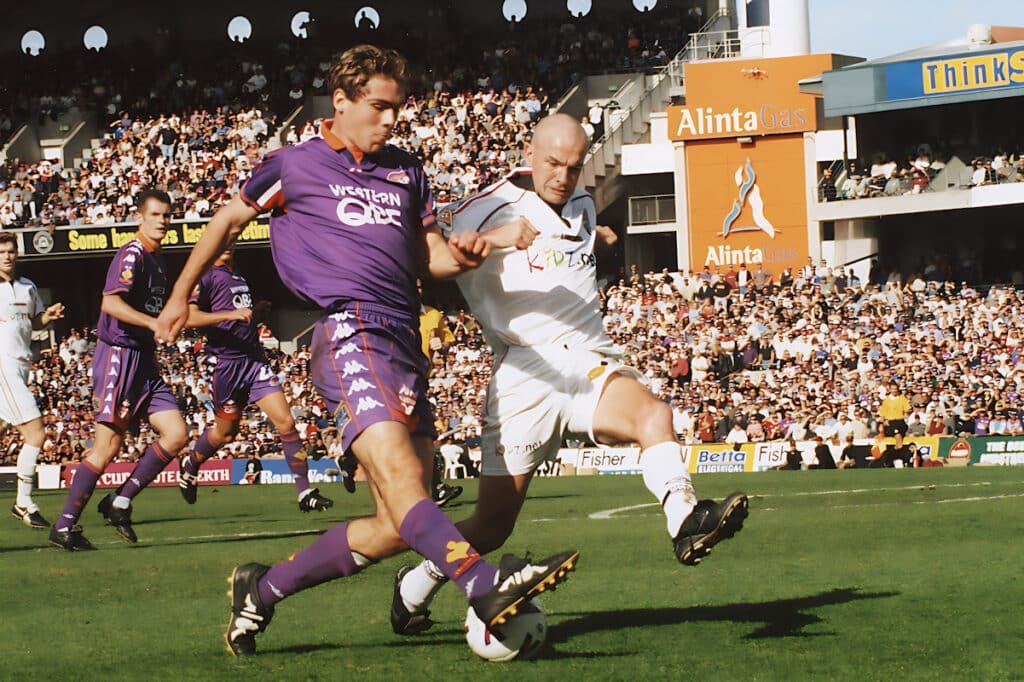
Ivan’s 23 games at Glory were outstanding, he was one of the best players in the National Soccer League, winning the NSL Under-21 Young Player of the Year and in 2016, twenty years after Glory formed, Ivan was voted into the best ever Perth Glory XI in their history.
Such was Ivan’s dominance that he was signed by Italian giants Juventus, on a 50/50 deal with Swiss club Basel. Here was a player who less than five years earlier had moved to the backblocks of Carnarvon as a refugee, and was now in Europe playing top flight football. His deal saw him go straight to Basel, where he would potentially develop in the Swiss League and then Juventus could take him to the Serie A.
Going from the national spotlight to playing in Europe, must have attracted the Australian selectors, not so much according to Ivan. “I remember there was always talk in Australia that I should be capped for Australia because at that time there was this whole philosophy we should get this player before he decides to play for another country.”
“It is really getting stronger, now it’s a big issue in Europe but at the time it was a speculative thing. There was some talk at the time while I was at Perth to get a call up for the National Team, but it never happened. I can say this now, but I was really one of the best players in the league at the time. Nobody called me.”
Ivan wasn’t worried so much about the Socceroos, he had achieved his aim of getting back to Europe with his football. “We all dreamt of playing in Europe, for me it was the ultimate to come back where a football culture is. I was 18 or 19, impressionable years you know, it was surreal for me at the time. I played a really good season in Perth and was impressed with all the attention and I seized the moment. I thought about staying with Perth another year, but when you have an offer from a giant you cannot wait for too long I suppose.”
Not long after arriving in Switzerland, the scouting methods of the Balkan countries would come to the fore, with officials from the then Yugoslavia getting in touch. “As soon as I came to Basel, they contacted me straight away, I remember there were some other players that were born in Switzerland and elsewhere. At the time the federation had a policy of getting players that had links to Serbia, although at the time it was still Yugoslavia.
By Ivan’s second season at Basel he was really starting to progress. The team qualified for the Champions League and he was playing some really good football. “Then I got sick and I didn’t play for two years.” Ivan suffered from depression and had a real struggle in regaining his health, he tends to divide his career before his illness and after his illness.
“I spent a lot of time with my psychiatrist, you know reflecting. Then I got a call up for the World Cup, it was a surprise call up for me. I didn’t get a call up when I was playing really good football, it was a time when I was coming back from my illness and then I got a call up. It would have been better much earlier.”
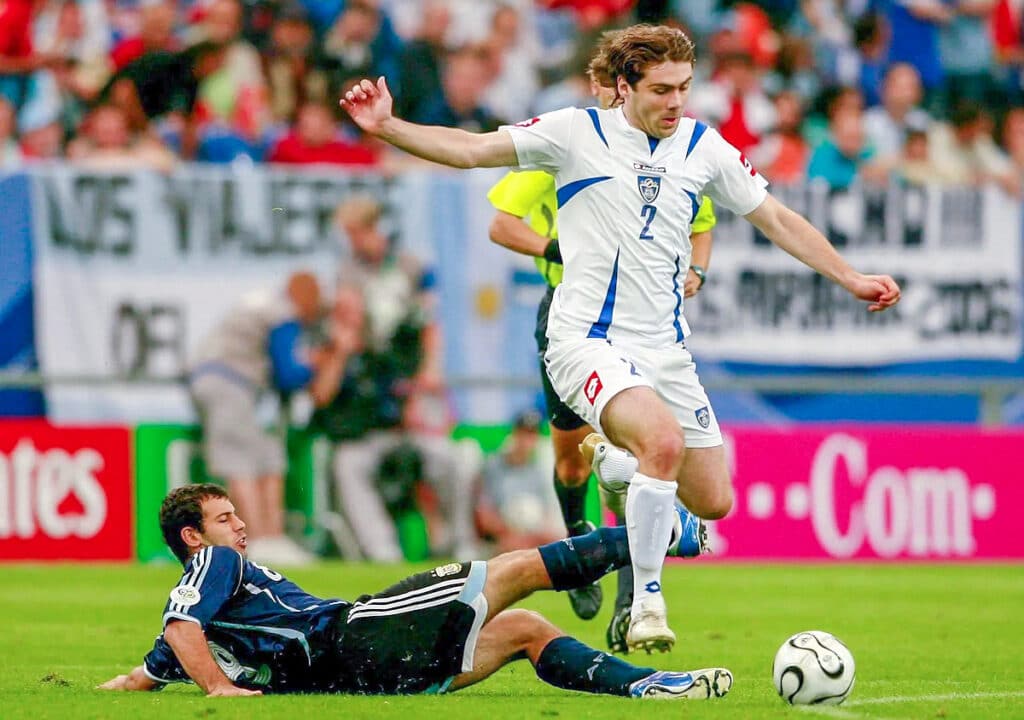
Ivan would feature at the 2006 World Cup, coming off the bench for Serbia and Montenegro in a 6-0 loss to Argentina and playing against the Ivory Coast in a 3-2 loss as well. “It was a bit ambiguous for me, the whole feeling, I hadn’t played the qualifications.”
“I told the coaches that maybe it’s not fair that I go to the World Cup without having played all these games you know, of course there were some players who didn’t get chosen who had been playing. But they called me up, and I felt like a bit of an alien out there. Also we didn’t play the best World Cup, so it was an ambiguous feeling.”
With allegiances to both Australia and the former Yugoslavia, Ivan wasn’t given the choice of who to play for with Australia not considering him. Ivan’s decision to play for Serbia and Montenegro was for romantic patriotic reasons. “My grandparents lived there and all my friends and the country had been devastated from all the wars and all that, I felt obliged as a person to do something for that country. It really was romantic patriotism, really nothing else.”
“You are part of something big and you are playing for that country but on the other hand I was also in the process of being resignated to the whole football world. I was already in that process, in time it faded away, you know the pride in the National Team and wearing the jersey and all that. It didn’t have that lustre anymore. In the background there was this excessive nationalism that really disturbed me.”
Nowadays Ivan divides his time between Serbia and Switzerland. Switzerland has a large population from the Balkans or with Balkan descent, and decisions on which country to play for is more of an issue there, than it ever was in Australia. “People talk about sports bringing people together, I think it divides them more, especially when you see players that have to decide which country to play for.”
“I say to a lot of young players, especially in Serbia, you know their parents call me and they’re really spoilt for choice maybe they play for Switzerland or Serbia and don’t know what to do. Then there is the commercial aspect, is it going to bring more added value to the player in the market if he plays for one country over another country.”
Although his time with the national team was after his illness, Ivan felt obliged to help out Serbia. “I had full conscious that I would have enjoyed much better status and better treatment in Australia than I did in Serbia, but despite all of that I decided to play for Yugoslavia.”
Ivan would play over 200 games with Basel in Switzerland, captaining the side for two seasons from 2006, before a brief switch to Turkey, where he won the league with Bursaspor and played in the Champions League again. He was capped 11 times at international level.
Surfing for England: Our Lost Socceroos by Jason Goldsmith is published by Fair Play Publishing, a publishing house that specialises in books about Australian football history and culture. It is available now from www.fairplaypublishing.com.au as paperback ($19.99) or e-book ($8.99).