
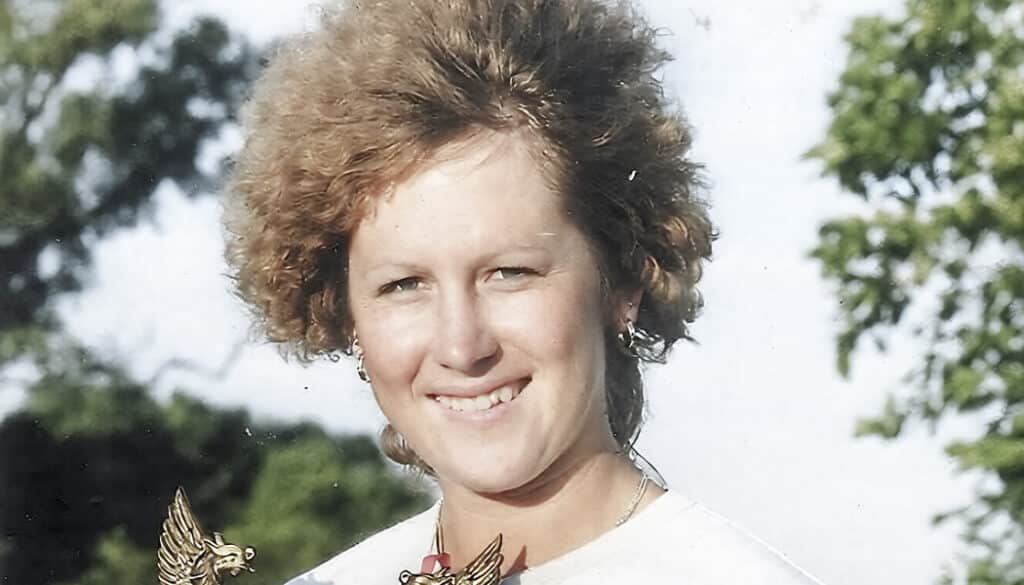

Anna Senjuschenko was one of those rare athletes blessed with a Midas touch, excelling at every sport she touched, including football. A tall, majestic central defender, Anna’s on-the-ball strength, reading of the game and long‑range shooting propelled her to State and national recognition at a young age.
By the time Anna turned 17 she was a star of the world stage, earning accolades that marked her as a future great of the women’s game. The football world was quite literally at Anna’s feet when her life and career were tragically cut short in 1979, but her legacy endures as one of the brightest talents Australian football ever produced.
Anna was born in Perth on September 16, 1961. Her parents, Andrej and Mariya, had left their homeland of Russia eleven years earlier with their young son, Alex, to start a new life in Western Australia. As a child, Alex taught his sister to play football and, with their father having also played in his youth, it was inevitable that Anna would fall in love with the game.
Alex played juniors with the local club, Inglewood Kiev, which had been established by Ukrainian migrants and wore the gold and blue of that nation. Playing at centre‑back, he progressed quickly through the club’s ranks to the first team and, in his late teens, was rewarded with State team honours. Anna adored her brother and chose to follow in his footsteps.
The inaugural season of the Western Australian Girls Soccer Association kicked off in 1972, with Swan Athletic crowned the first league champions. Inglewood entered a team the following year and Anna was quick to sign up, playing her first competitive game at the age of 12 in the same position as her brother. But with one win from 21 games, Inglewood finished bottom of the table.
Inglewood signalled their return to the top flight in 1976 by lifting the Lou Ricci Cup. 15‑year old Anna featured prominently in that pre‑season success as well as the winter league that followed. With Inglewood finishing third in Division One, Western Australia coach Peter Dimopoulos called the promising teenager into his squad for the National Championships in Melbourne.
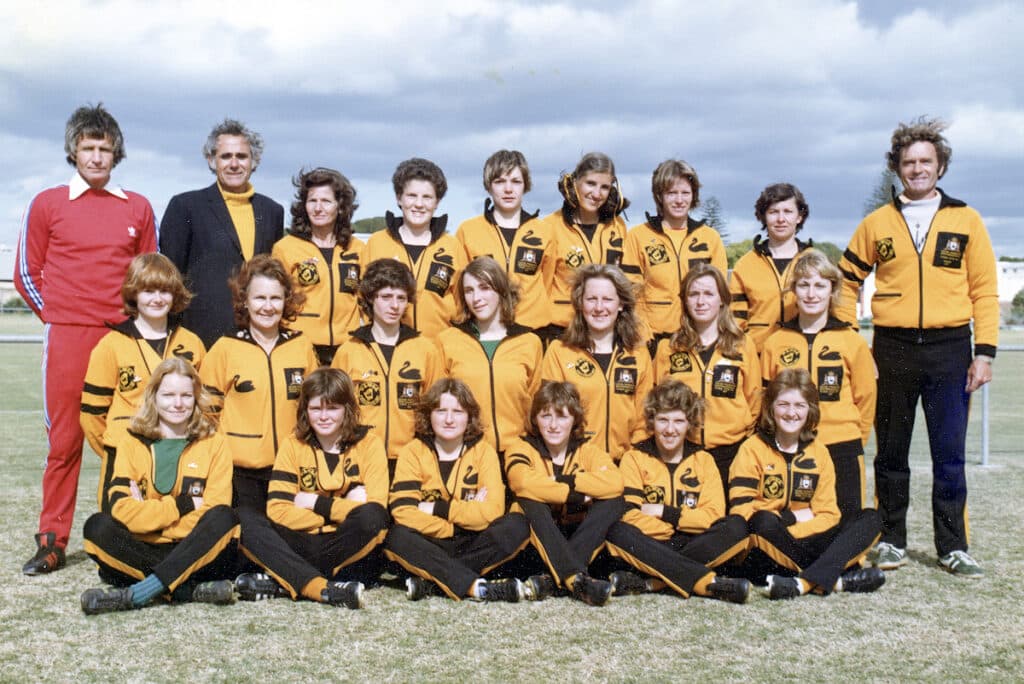
Anna was named in the State squad again twelve months later, when the National Championships were held in Perth. Her performances during the week‑long event caught the eye of national team coach Jim Selby, who selected Anna and State teammates Sandra Brentnall, Julie Clayton, Heather Dunbar and Teresa Kozak in Australia’s squad for the Euro‑Asia Cup in Hong Kong. Unfortunately, the competition did not eventuate.
“I only knew Anna as a teammate,” recalls Sandra. “She was a strong defender who read the game well, had the ability to move forward, creating attacking moves as well as being great in the air. She was a team player. Good at heading, tackling, she was quick off the mark, able to dribble past players with ease. She was always friendly away from the pitch, always smiling and laughing.”
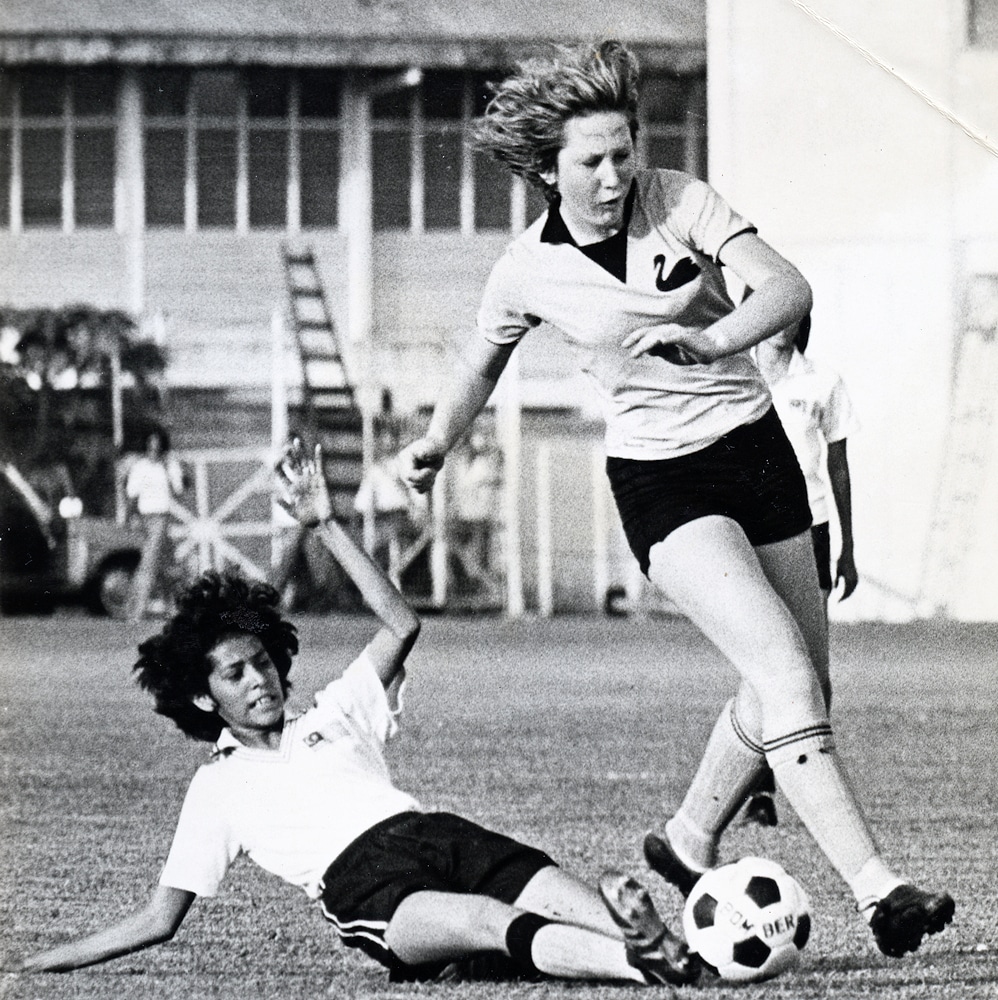
The State squad assembled again just over a month later for a seven‑game tour of Malaysia and Singapore. Anna treated herself to a rare goal in the opening fixture, a 4–0 win over Selangor. Western Australia would win all six outings against Malaysian regional sides and the national team before rounding out the trip with a scoreless draw against Singapore.
Western Australia were amongst the favourites for the 1978 National Championships and they didn’t disappoint, claiming four wins and a draw to lift the trophy for a second time (read about Western Australia’s 1975 National Championships success). The tournament programme described Anna as “a player of tremendous potential. She is good in the air, distributes the ball well and likes to attack from a deep position.”
So great was the State team’s dominance that seven players — Sandra Brentnall, Julie Clayton, Barbara Kozak, Teresa Varadi (née Kozak), Sharon Loveless, Judy Pettitt and Anna — gained selection in Australia’s squad for the inaugural World Women’s Invitational Tournament, a precursor to the Women’s World Cup.
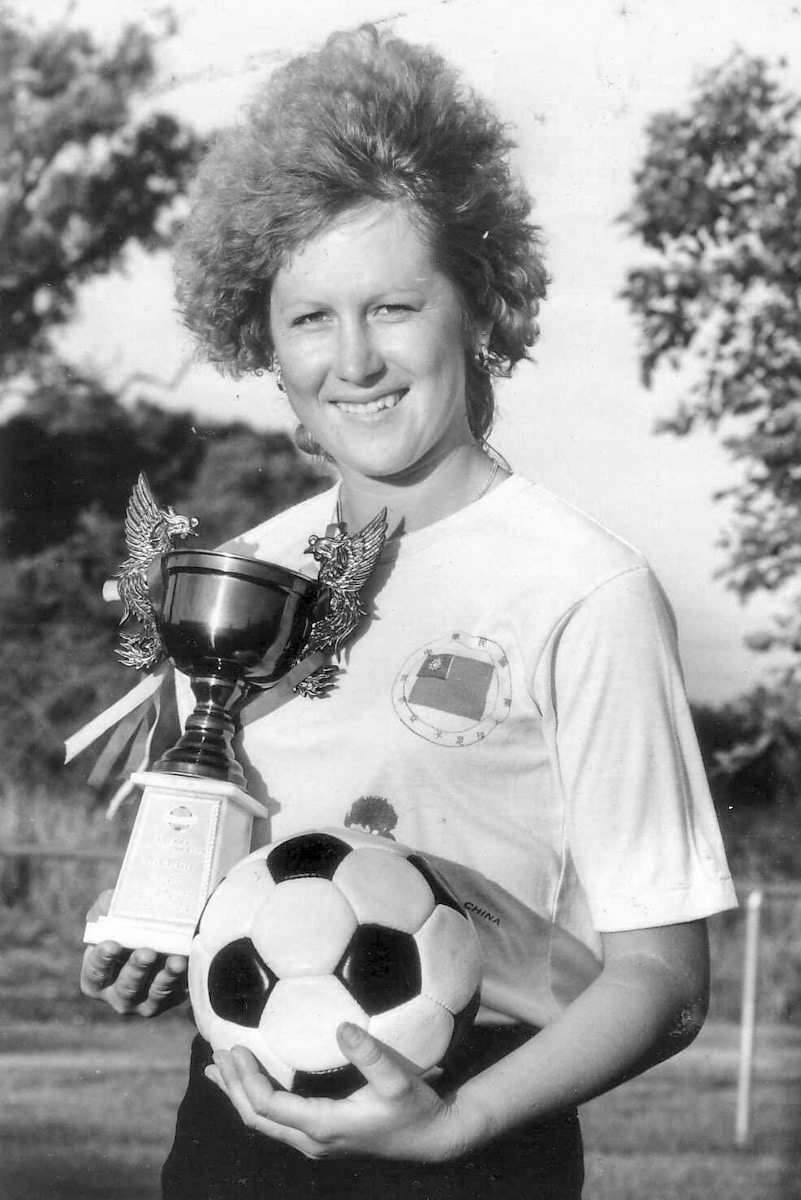
The twelve‑nation event hosted by Taipei proved to be a genuine breakout moment for Anna, who had just turned 17. Her performances against USC Landhaus Wien (Austria), Dallas Sting (USA), Hackås IF (Finland) and Denmark Select prompted the local media to vote her “Star Player”. Further accolades followed with Anna named in the World XI.
Post‑tournament, Anna turned down an offer to play in the United States, saying she was too young for such a move. In June 1979, the Shire of Bayswater presented her with the Youth of the Year award in recognition of her achievements on both the football field and in softball, Anna representing Western Australia in the latter at under‑16 level earlier that year.
Having made her mark on the world stage, Anna returned to club football with Inglewood, where her on‑field talents resulted in State selection for a fourth successive year. She was expected to be named in Australia’s squad for the 1979 Trans‑Tasman series with New Zealand when fate intervened in the early morning of August 19, 1979.
Anna had attended a quiz‑night fundraiser with her State teammates just a fortnight out from the National Championships in the Northern Territory. She was travelling home from the event when the car she was a passenger in was involved in a fatal traffic accident in the south‑east suburb of Wilson. The life of one of the world’s brightest young talents was over.
Jill Gray, whose 21st birthday coincided with the quiz night, was on her way to the following day’s game when news of Anna’s death broke. “The following morning myself and three friends were driving to our club game when an announcement came over the radio which stated Anna had been killed in a traffic accident. We were all in complete shock and couldn’t believe what we had just heard,” she recalls.
Jill has “fond memories of her great sense of humour and her boisterous laugh”, a trait common among those who knew her. “Even though she was only 17 years old, she was an imposing figure on the field … She was tall and solid and reasonably fast. Fantastic with anything in the air. She was a great team member and was liked by everyone.”
At Anna’s funeral a week later, her teammates wore their State tracksuits and formed a guard of honour as her coffin entered the church. Another week on and they lined up again, this time at the National Championships, where the memory of Anna cast a long shadow across the proceedings. Although gone, she would not be forgotten.
The Western Australian Women’s Soccer Association honoured Anna’s memory by renaming the annual knock‑out competition the Anna Senjuschenko Memorial Shield, with a new trophy donated by the staff of Boans Morley, where Anna had worked. When Inglewood won their first Division One title in 1980, her former teammates and coaches dedicated that success to Anna.
In 1996, Anna was amongst the first players to be inducted into the Football Hall of Fame Western Australia, which celebrates the greats of the past. Eighteen years later, she was recognised as one of Western Australia’s best 100 players of the previous 100 years when named in the Century of Champions.
Based in part on The Story of Anna Senjuschenko, Australia’s tragic lost talent by Richard Laverty.