
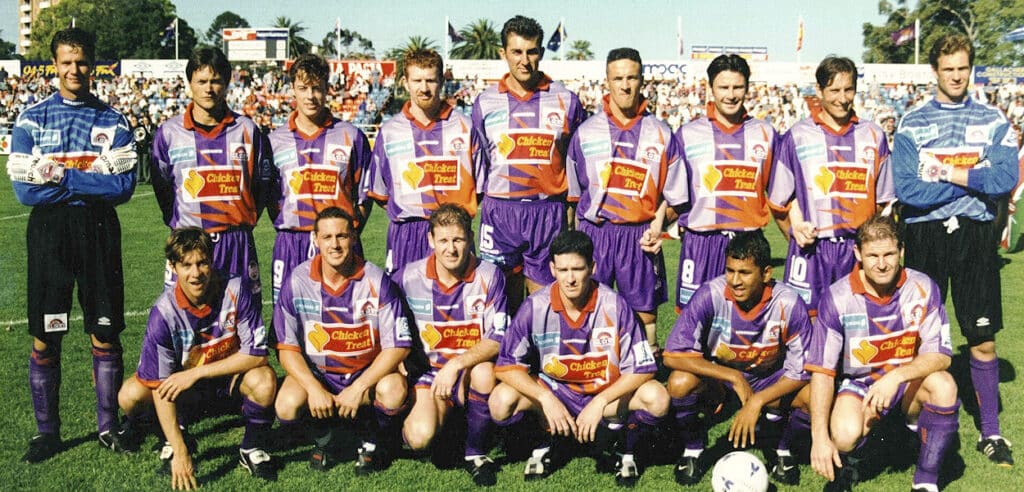

Thirty years ago a group of footballers carved their names into Western Australian sporting history when Perth Glory made their National Soccer League debut. Glory’s first outing against Sydney side UTS Olympic attracted a huge crowd of 9,639 to Perth Oval and, although the result didn’t go the hosts way, the signs were there that something special had started.
“Really good times, the atmosphere, the passion, the commitment,” reflects Gareth Naven, Glory’s inaugural captain. “It was a time that transformed everything in regards to football, culture, diversity and inclusion. It was about making everyone proud. As players we couldn’t have had the opportunity to represent WA in the first national competition without everyone being involved, the supporters, our families, the whole state.”

Western Australia had campaigned since the mid-1970s to have a team in the national league, only for the doors to be slammed shut on every occasion. Then, on June 6, 1994, the Australian Soccer Federation announced that a team from Perth would be admitted into the National Soccer League the following year.
The Soccer Administration of WA went straight to work by seeking expressions of interest from anyone wanting to run or own the Perth-based NSL club as an independent entity, that is, not associated with any of the existing local clubs. On October 16, Arena Investments, a consortium of local businessmen, was granted the NSL licence.
Arena, which consisted of Nick Tana, Paul Afkos and Anthony Di Francesco, prioritised seeking a guarantee from the Australian federation that they would be able to compete in the NSL for at least three years. It was estimated the venture would cost $1 million to set up and upwards of $500,000 annually.
“Getting our initial application accepted was very difficult because the east coast establishment said that we wouldn’t bring anything more to the table than higher fares and costs,” Tana commented. “So that was the biggest challenge, trying to convince them that we could add to the league and actually raise the bar so high that they wouldn’t be able to get anywhere near us.”
Four months later Arena revealed that it favoured delaying its national league admission until 1996, or even later, so as to have adequate time in which to assemble a squad, coaching and support staff, and find a suitable ground. But following the resignation of national chairman John Constantine, the submission sat gathering dust at ASF headquarters.
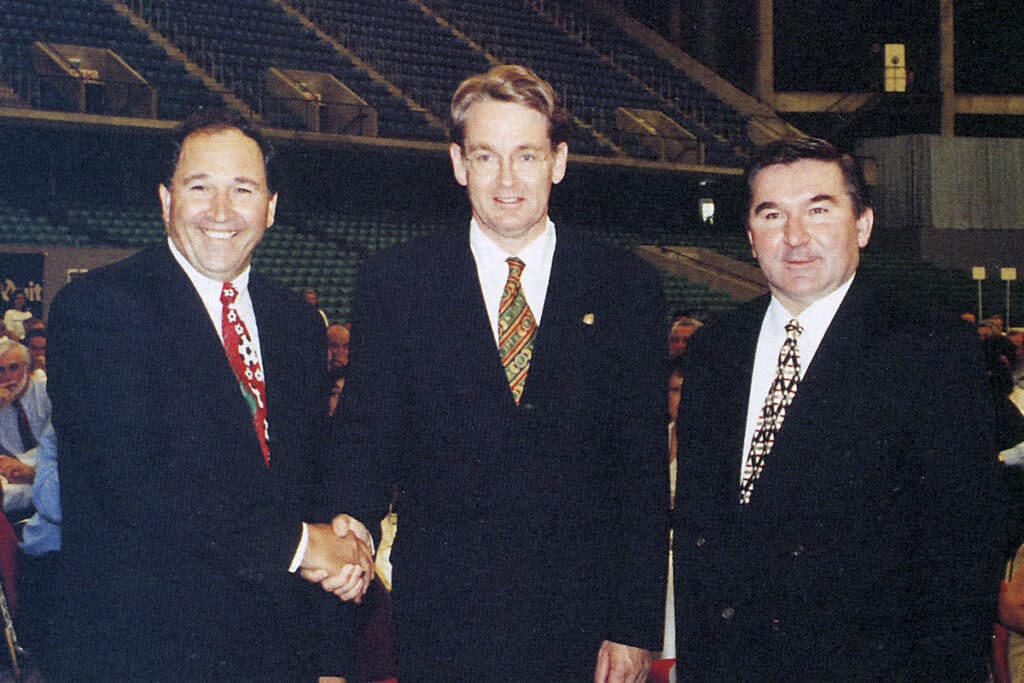
New ASF boss David Hill promised swift action when he was appointed in April 1995, and he followed through on that commitment. After meeting with Arena representatives in August, Hill said: “The NSL needs a Perth team in the competition as soon as possible. We envisage that Perth could be the role model for the ’96 season.”
Arena’s first major signing was that of highly-respected administrator Roger Lefort, who was installed as the club’s general manager in October. Lefort was previously the chief executive of the Soccer Administration of WA and was a former president of the Junior Soccer Association. His business background was in sales management and marketing.
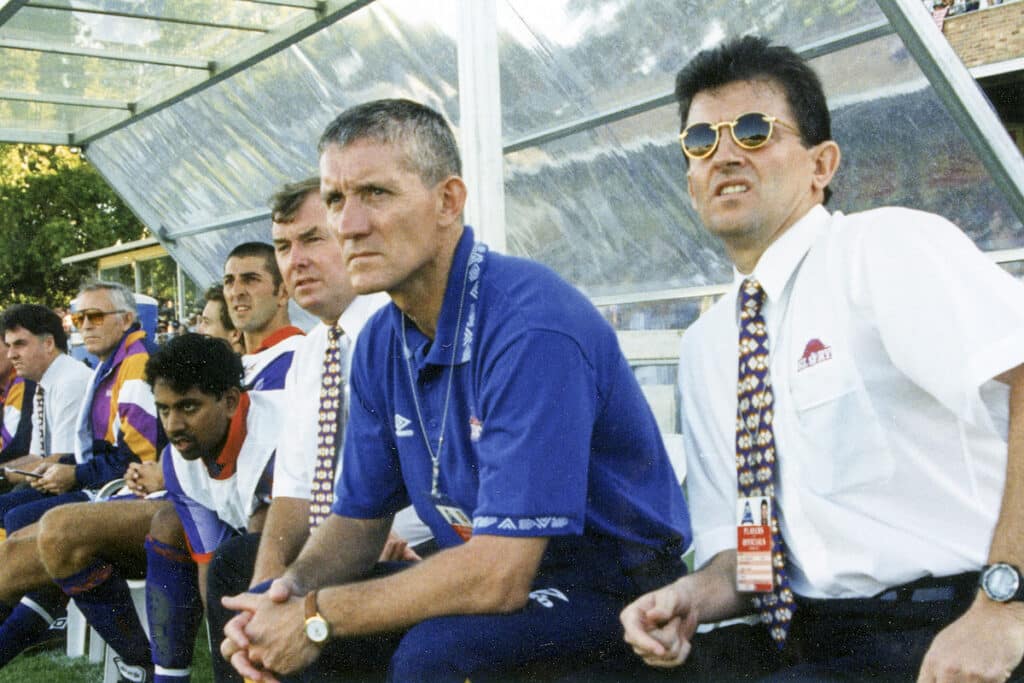
A few weeks later local hero Gary Marocchi was appointed team coach. A former Australian national team captain, he won the job ahead of some strong overseas and interstate candidates including former Socceroos boss Rale Rasic and Matildas coach Tom Sermanni. One-time Manchester City player Mickey Brennan was recruited as assistant coach.
Marocchi, who steered Perth Kangaroos to the Singapore League title the previous year, signed up on a part-time basis. He said his team selection would be mainly part-time locals while indicating there was scope for up to three full-timers. Marocchi was given the go-ahead to approach New Zealand international Wynton Rufer, but his $1 million contract with Japanese side JEF United was beyond the fledgling club.
The launch of Western Australia’s first national league contestant was a lavish 900-person event at Burswood Dome on December 1. It was revealed the team would play under the banner of Perth Glory, a name selected from over 800 suggestions put forward by the public, and in the unique colour combination of purple and sunburst orange.
“The idea behind the name was something totally new that represented the state and winning,” reflected Lefort. “The board chose the name and the colours because we really wanted to make a statement and to stand out, so we went for everything new. The colours looked stunning and the name was great.”
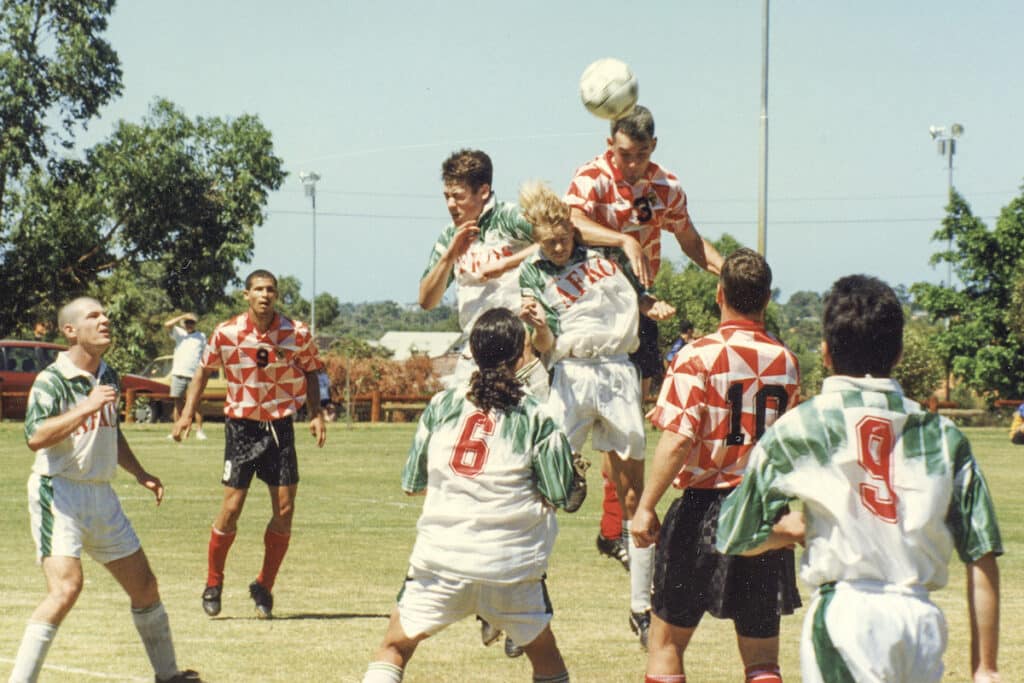
Marocchi assembled a squad bristling with local talent for a series of practice matches across the opening month of 1996. Their first hit-out arrived on January 14, 1996, against Kingsway Olympic. Welsh-born Alan Armstrong opened the scoring after 3 minutes and added another not long after on a morning when Steve Bourne, Robin Dyers, Peter Murphy and Gareth Naven also found the net for a 6-2 success.
A week later, Marocchi added several new trialists to a line-up that beat Bayswater Panthers 4-1. The club made a bold bid to sign former England striker Cyrille Regis, who showed brief interest until Chester made a more tempting offer. A flurry of trial games against local opposition followed punctuated by outings with Japanese side Cerezo Osaka and Woodlands Wellington from Singapore.
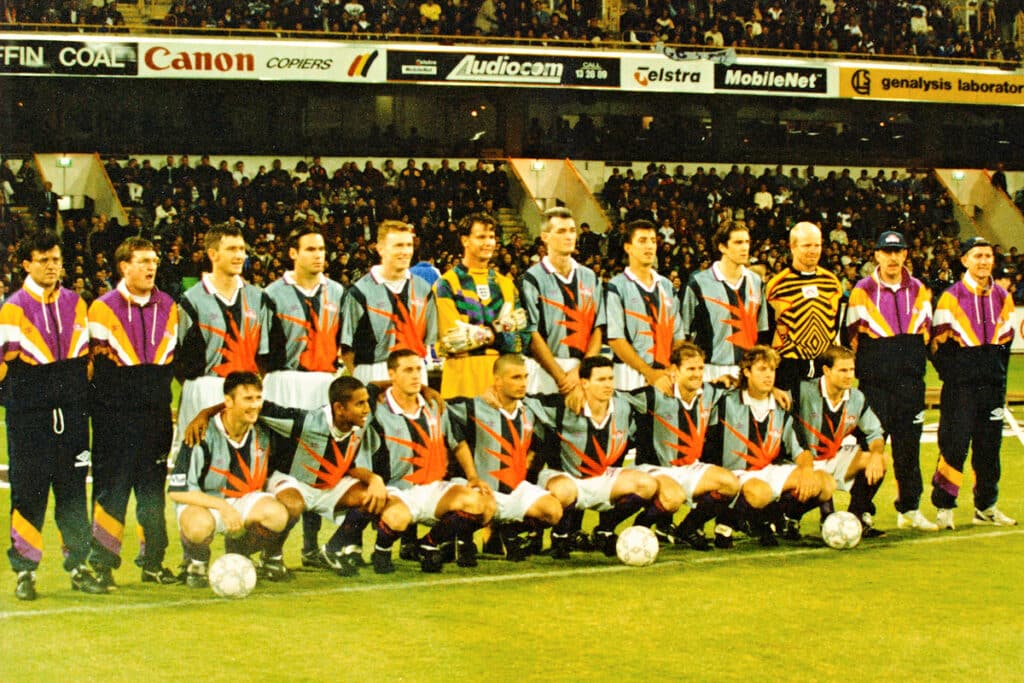
Glory faced its toughest test on May 31 with an glamour friendly against Italian giants Sampdoria. Marocchi gave the clearest indication yet of who might eventually represent Glory with the inclusion of goalkeeper Tommy Maras, twins Craig and Gareth Naven, Scott Miller, Paul McVittie, Paul Strudwick, Alan MacKenzie, Dale Wingell and Vas Kalogeracos.
The Italians proved to be a different class, cruising to a 3-0 win with Roberto Mancini scoring twice with Vincenzo Jacopino nabbing the remainder. Kalogeracos was unlucky not to pull a goal back when he hit the crossbar late on. For Glory, there were eye-catching displays from the Naven twins, MacKenzie and Maras.
The race to find a suitable home ground began in earnest when, early in June, Soccer Australia announced the fixtures for the 1996/97 Ericsson Cup season. First up for the newcomers was a home contest with Sydney heavyweights UTS Olympic on October 13. The Velodrome in Mt Hawthorn, Parry Field in Belmont and the Australian Rules grounds at Subiaco Oval and Leederville Oval were among 23 facilities considered.
With no venue fitting Glory’s requirements – a minimum 6,000 covered seats – the Town of Vincent proposed a ground share arrangement on Perth Oval. Glory would play at the home of the East Perth (Australian Rules) club for two seasons, with the option of a third. Unsuitable floodlighting meant games would have to be staged with 5pm kick-offs for the summer season.
Glory began training at Perth Oval on August 8 with an eight-player squad consisting of Gareth and Craig Naven, Paul McVittie, Paul Strudwick, Tommy Maras, Scott Miller, Vladimir Beretovac and Alan Armstrong, who later withdrew because the part-time position clashed with his full-time duties as a police dog handler.
The following week, Glory unveiled classy defender Vinko Buljubasic, formerly of Melbourne Knights, as their first major eastern states signing. And only a few days later New Zealand international defender Gavin Wilkinson was recruited after turning his back on several European offers.
Glory snared what was to be a key signing when Bobby Despotovski returned to Perth following a stint with Melbourne club Heidelberg United. Despotovski, who would go on to become Glory’s all-time record goalscorer, gave a glimpse of what was to come by bagging six goals in a 12-0 trial win over Morley Windmills. A few weeks later he snared a hat-trick in a 7-0 victory against Sorrento.
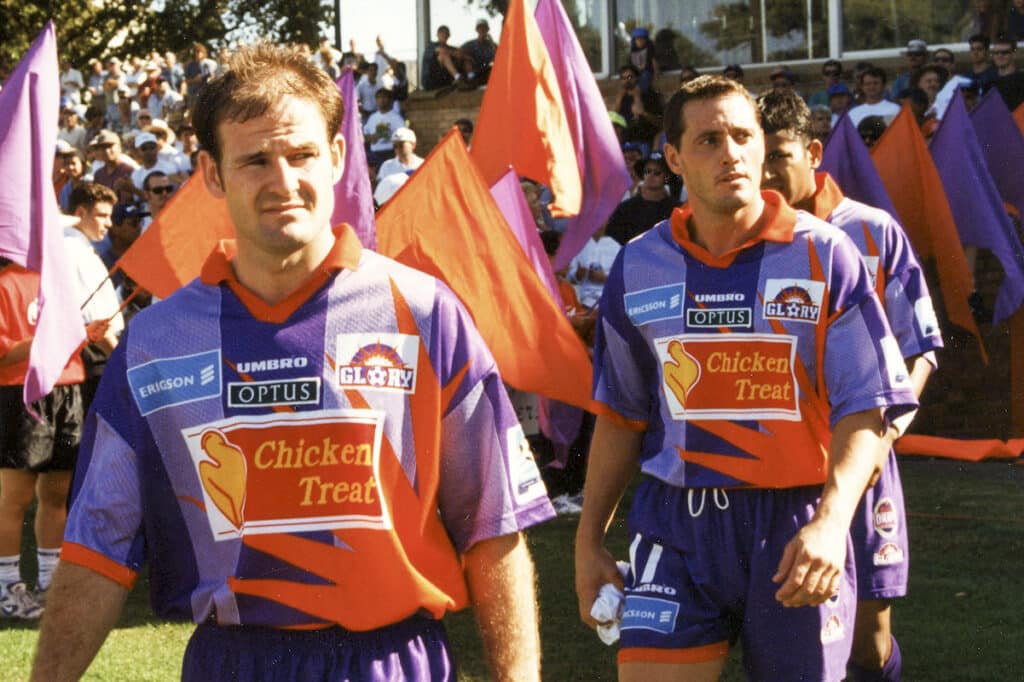
Former Scottish league striker Alan MacKenzie became Glory’s third full-time player as Marocchi continued to fine tune his squad. Meanwhile, club management set a top ten finish and a crowd target of around 5,000 as markers of success in the lead-up to Glory’s national league debut against UTS Olympic on October 13.
“We came out for the warm-up and there were maybe 1,500 or so people there and the boys were like, this is good,” Miller recalled. “Walking out of the tunnel on to the pitch was a very proud moment. We’d grown up in WA wanting to see this happen, wanting our own team in the national competition and the noise that went up when we came out is something that has always stayed with me.”
While Glory walked onto the field to rapturous applause, it quickly came became apparent that it was not going to be a dream debut. The enthusiastic crowd of 9,639 was silenced midway through the first half when Kris Trajanovski put Olympic ahead. Despotovski squandered a golden opportunity to bring the teams level just before the hour but his penalty kick came back off the upright.
Five minutes later Norm Tome doubled the visitors lead. And before too long the margin had blown out to four goals with Trajanovski scoring his second before Doug Ithier had the misfortune of sending the ball into his own net. The game was deep in stoppage time when MacKenzie’s diving header to Dale Wingell’s cross snared the hosts a late consolation.
“The scoreline didn’t reflect the chances we had,” Marocchi commented post-game. “We hit the crossbar, had one shot cleared off the line and missed a penalty. Sydney scored three from set-pieces and one from a deflection, so overall we didn’t do too badly. And I know we can improve.”
Glory’s starting eleven that day was Maras, Craig Naven, Wilkinson, Buljubasic, Gareth Naven (capt), Miller, McVittie, Strudwick, Ithier, Despotovski and MacKenzie. Wingell and Vlad Beretovac replaced Wilkinson and Strudwick, respectively, midway through the second half while goalkeeper Vince Matassa remained on the bench alongside Marocchi and Brennan.
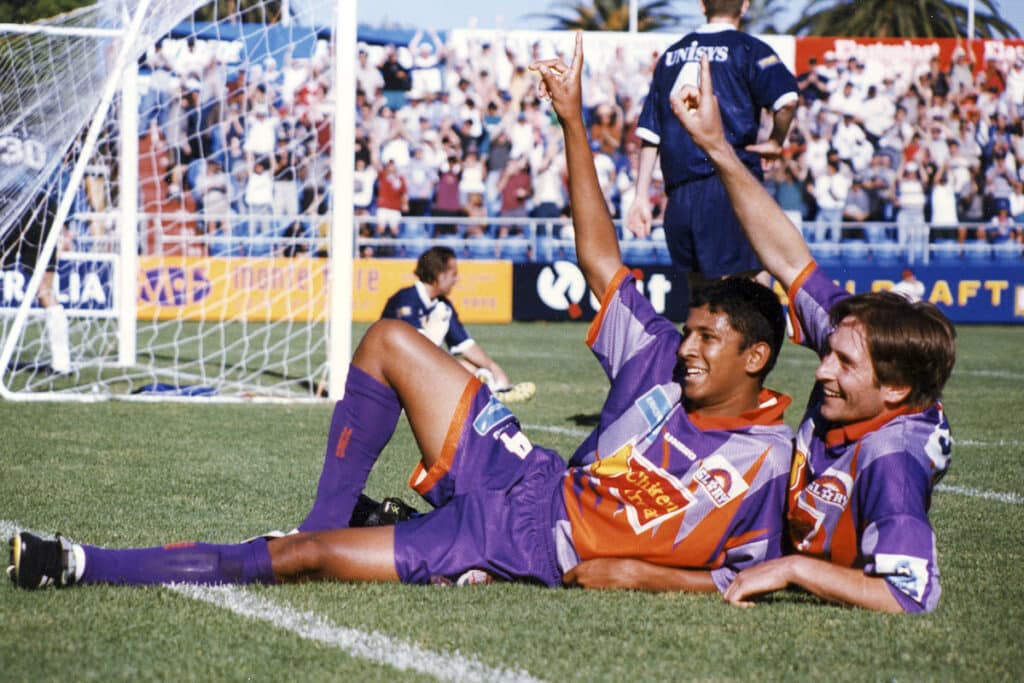
Next up for the league newcomers was a difficult road trip featuring back-to-back games. West Adelaide claimed the spoils from the first of those before Glory notched their maiden national league win by overcoming Newcastle Breakers 3-1. Despotovski found the net twice in the space of three minutes with Strudwick scoring the third goal.
Despotovski helped himself to two more goals in Glory’s stunning first home victory – a 6-0 thrashing of Canberra Cosmos in front of 8,053 at the start of November. The other goals that afternoon came from McVittie, Dale Wingell, Miller and Gareth Naven. And they did it with ten-men after Buljubasic was sent off for a second yellow card offence on 78 minutes.
Glory’s supporters were quite literally making their voices heard too. The Hill was the beating heart on matchday, creating an atmosphere unlike anything the league had seen before – loud, good‑humoured and defiantly Western Australian. Their chants, colour and sheer numbers gave the fledgling club a sense of identity, turning home matches into events and helping propel Glory into the national spotlight.
Chairman Tana could not have been happier. “It has been noted by commentators in the east that Western Australian crowds tend to be quiet when compared to their eastern states rivals,” he said. “I am delighted that WA’s soccer fans have proven the critics wrong. It is fair to say that we have the best supporters in the country.”
Despite a scoreless draw with fellow newcomers Collingwood Warriors and losses to Gippsland Falcons and Sydney United, interest in Glory continued to build. Local radio and television devoted unprecedented airtime to the game while Perth’s newspapers championed the teams’ on and off field achievements. The tone was clear: Glory were reshaping WA’s summer sporting landscape.
A character building 2-1 home success against Adelaide City came courtesy of a last gasp winner from Despotovski. The 25-year old marksman added another two goals a week later when Brisbane Strikers were humbled 5-1 at their place. And on returning to Perth, Glory scored their third straight win by downing Wollongong Wolves 3-1 with Despotovski again netting twice.
The focus on playing attacking football was a box-office hit and led to some truly unforgettable moments, such as Miller’s sensational late winner against Melbourne Knights a few days after Christmas. “I tried to drill it, but it ended up lobbing the goalkeeper,” Miller recalled of his 90th minute strike that triggered delirium in the home crowd of 14,757.
The following weekend Kalogeracos stole the show by scoring both goals in a pulsating 2-1 victory over four times national league champion Marconi. Seven days later at Perth Oval 17,582 spectators – the second-highest ever for a regular season NSL fixture – watched the same two teams slug it out in a 1-1 draw.
“Everyone was working virtually full-time,” Marocchi remembers. “They were training four nights a week and then travelling interstate. They sacrificed a lot for the club. We went from local games with a couple of hundred spectators to 5-6000 people. At one game there was just under 18,000. It was something never seen before in Perth.”
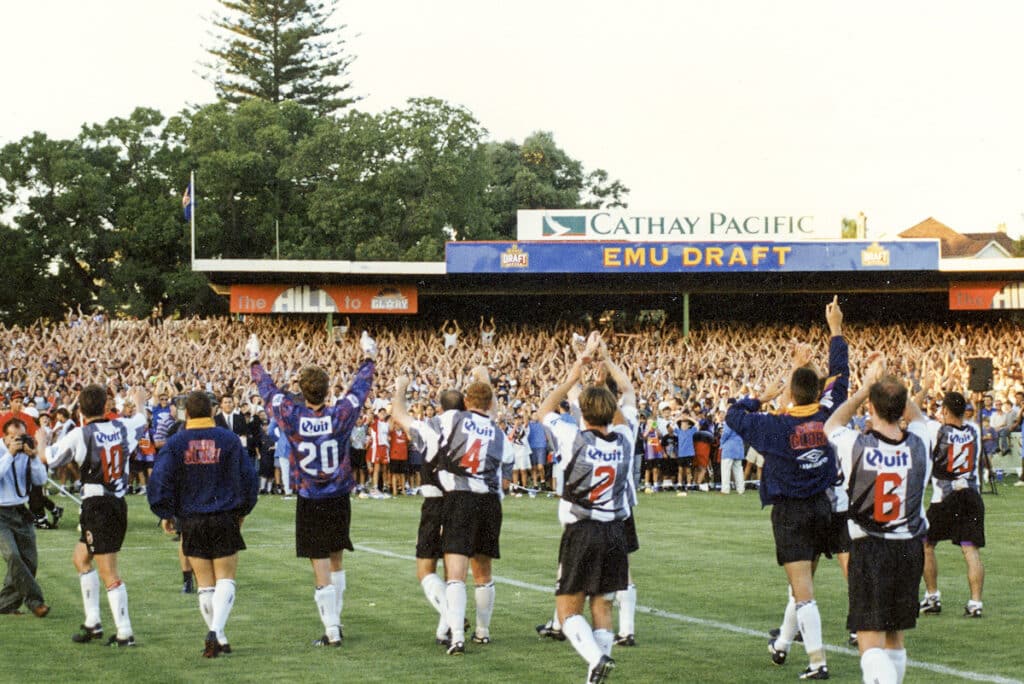
A three-week mid-season break, due to an international window, could not have come at a better time for a Glory squad that had been extended by niggling injuries and suspensions. On returning to action they out-classed UTS Olympic 2-0 on their own turf before playing out a 1-1 home draw with West Adelaide in front a remarkable crowd of 15,737.
Having climbed up to third on the standings, Glory’s season then temporarily went off the rails. From a run of six games they picked up just a single win, suffering disappointing and successive losses to bottom teams Newcastle, Canberra and Collingwood. By mid-March Glory had slipped to seventh.
“Having that low period cost us a top six spot,” Gareth Naven reflected at seasons’ end. “I think our lack of experience and lack of depth told against us in that spell. It was frustrating, for, after taking a few games to adjust to the pace and demands of the NSL, we had strung together some great results. Then we hit this brick wall … we just lost our confidence.”
The recruitment of seasoned goalkeeper Robert Zabica and midfield talent Tony Carbone helped steady the ship as the home straight beckoned. Glory collected points from three of their next four games, amongst them a momentous 3-1 home victory over reigning champions Sydney United thanks to Dale Wingell’s looping header and a double from Kalogeracos.
Wollongong Wolves away proved to be another defining moment. Coasting at 1-0 courtesy of Despotovski’s early opener, a red card to McVittie and a penalty converted by Wollongong on 34 minutes turned the game on its head. The ten men of Glory dug deep to keep their opponents at bay in the second half before goals in quick succession from Wilkinson and Despotovski stole a hard-fought win.
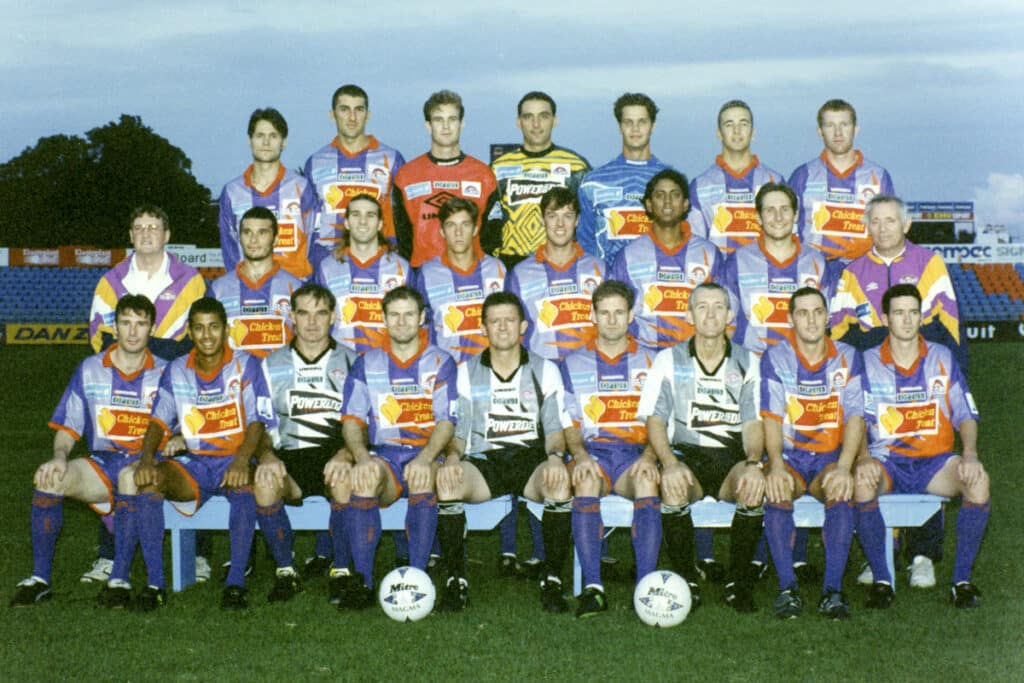
Glory entered the final home game of the campaign needing victory to stay in the hunt for the finals. Into the spotlight stepped Kalogeracos, who demonstrated his prowess in front of goal with a remarkable first half hat-trick to orchestrate a 4-0 win over South Melbourne. Kalogeracos’ third goal, a sensational long-range into the top corner, would later be rewarded with the Goal of the Season.
That triumph put Glory within reach of the finals in their first season. A draw away at Melbourne Knights would have been enough to secure qualification but, with an intimidating crowd behind them, the hosts controversially claimed the last play-off spot with a 3-1 win. Glory had been reduced to ten men following the dismissal of Strudwick after clashing with Andrew Marth when the teams were level.
“I was obviously disappointed because I thought we had done enough to finish in the top six,” said Marocchi, whose side claimed seventh place, a single point outside the play-offs. “The highlight was proving that Perth Glory were a breath of fresh air for the Ericsson Cup and people started to look up to us.”
Glory had set the league alight with their attacking style which had delighted hometown fans, who turned out in droves to experience the phenomenon. The thirteen home games attracted a league best 154,318 spectators – 58,000 more than the next best, South Melbourne – and the Perth Oval average of 11,870 was an NSL record.
The season came to a close on May 31 when over 600 guests attended Glory’s first awards ceremony. Gavin Wilkinson, who was absent due to international commitments, scooped the Most Glorious Player and Supporters Player of the Year awards. Despotovski finished as top scorer with 14 goals, two more than Kalogeracos.
“Without a doubt Perth Glory’s first season in the Ericsson Cup was a terrific bonus for the code in Australia,” commented Soccer Australia chairman David Hill. “At every level Perth Glory Soccer Club established itself as one of the leading outfits in the National Soccer League.”
Quotes taken from a variety of sources including The West Australian newspaper and club publications The Glory Story Volume 1 and Celebrating 20 Years of Perth Glory 1996-2016